
Narrated by Iain Glen, this independent natural history documentary investigates the Scottish Wildcat, their endangered status and the conservation efforts being undertaken to prevent their extinction.
Scottish Wildcats are affectionately known as Highland Tigers. The name originates from their striped fur and that they’re not only one of Britain’s largest predators, but the UK’s only “big cat”.
Originally released on Netflix in 2018, this is the first time the full length, unedited version has been published, and in 4K.
Category: Columnists
This category is for a columns page that shows all the columnists posts.
Quote: George Will on Cats
The phrase ‘domestic cat’ is an oxymoron.
— George Will
Shooting Craps: The Wombat
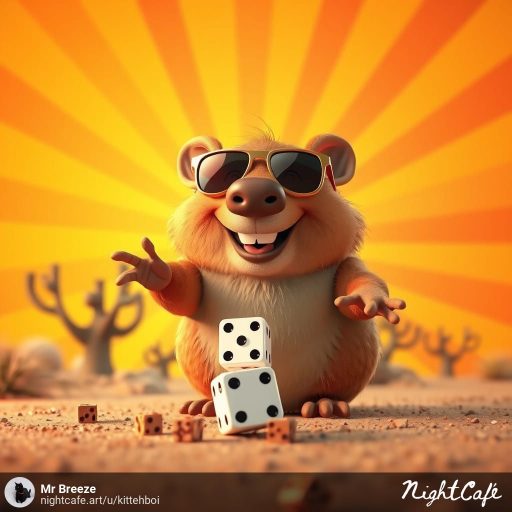
by @kittehboi and Nightcafe.
Wombats are cute little Australian animals. Their long teeth make them look like rodents, but in reality they’re marsupials, relatives of koalas and kangaroos.
Marsupials differ from mammals like dogs and cats in a number of ways, but the most important way is that wombat fetuses have a simple placenta that doesn’t provide enough nutrition for a large fetus. The joeys have to get out so early that they can’t live outside the mother’s body. After the joeys are born they have to make the arduous climb into their mama’s special pouch, where they will keep warm and drink milk until they’re big enough to live outside.
Wombat pouches are unique among marsupials. While kangaroo pouches open at the top, wombat pouches open at the bottom. Wombats like to dig. If they had a normal pouch, it would scoop up dirt.
According the the Department of Natural Resources and Environment Tasmania, bare-nosed wombats are about the size of a medium size dog.
Bare-nosed wombats average 1 m [39 inches] in length and 27 kg [50 pounds] in weight yet can reach up to 1.2 m [47 inches] in length and up to 35 kg [77 pounds] in weight. The Tasmanian wombat is not as large or bulky, averaging 85 cm [33 inches] in length and 20 kg [48 pounds] in weight, while the Flinders Island wombat is smaller still averaging only 75 cm [30 inches] in length.
Now about the dice.
Wombats have particularly long, flexible intestines. It takes up to 12 days for poop to traverse the wombat’s digestive tract, and it is wrung dry during the trip. The result is that wombat poop is unique: it’s cubic like dice. No other animal in the world poops dice!
Badgers–Scent Glands (Badger Article 2)
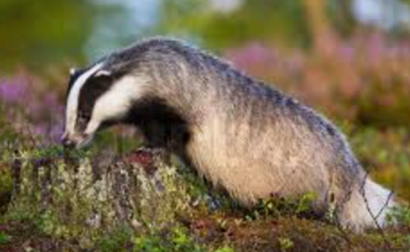
Why you see a badger pop its bottom down on the ground…
Scent plays a pivotal role in group and territory maintenance. Valuable tools in the act of scent-marking are the subcaudal gland (SCG), which is close to the anus, and the paired scent glands located just inside the anus—anecdotal observations suggest that scent glands between the toes (i.e. interdigital glands) may also be used when marking objects, such as trees, near the sett.
Arguably, the most important scent-marking tool is the subcaudal gland, which is used to mark objects in the territory and other members of the clan, which is a process known as allomarking.
The SCG comprises a pouch, the subcaudal pouch (SCP), that’s divided into two sections by a membrane. Several layers of sebaceous glands line the SCP, and these glands secrete an oily lubricant onto the skin and hair, as do apocrine gland cells. It opens to a horizontal slit, two to eight centimetres (about 1-3 in.) wide, between the base of the tail and the anus. The gland secretion is predominantly a composition of unsaturated fatty acids and water, with the consistency of a margarine-like paste. The bacteria partly generated the secretion’s odour in the pouch. Each fatty acid has its own characteristic smell. Chemical analysis of the SCP has shown that the bacterial component and fatty acid composition vary from badger to badger, suggesting each individual has its own unique scent.
What activity occupies them during this season?
Through winter, badgers are a lot less active. Badgers do not truly hibernate, but may enter a state of torpor during freezing or snowy periods. During torpor, the badgers will remain in the sett, often for periods of several weeks, and metabolise fat reserves accumulated during the summer and autumn.
There is usually a marked decrease in a badger’s body temperature during the winter and early spring, being between 2C and 9C (3.6-16.2F) lower from November to April than it is from May onwards. This decrease in body temperature allows for greater “fuel economy,” prolonging their fat reserves when food is scarce or buried under snow.
During periods of exceptionally cold weather, badgers will often use a latrine inside the sett, rather than venturing outside. Though foraging activity fluctuates unpredictably during winter, badgers may forage, even in the snow.
Badgers in Winter…(Badger Article 3)
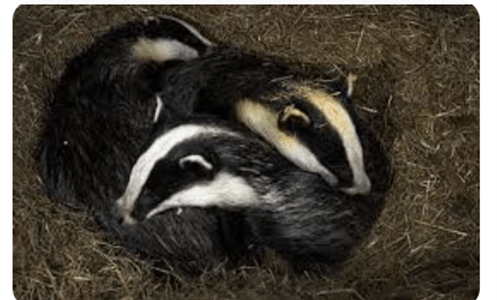
Badgers slow down so much that they can happily go into a deep sleep for days or even weeks during times of harsh weather. This sleep state, torpor, requires a significant sound for awakening, unlike hibernation’s deeper state.
Badgers build up reserves of fat during the autumn when there is plenty of food to eat. Fallen fruit, nuts, plus berries, combined with insects, worms, plus carrion, supply badger body fats to slumber for weeks, thus there’s zero worry for waking to eat. Badgers experience winter lethargy during this time period. As they rest, their bodies continue to function by using the energy in those fat reserves.
The UK experienced a mild autumn; thus, the badgers could fatten for winter. Our visiting badgers have been coming every night through December still. Following a dry summer, badgers require nourishment and hydration to survive the winter.
Whole family groups of badgers can make themselves comfortable deep underground in their sett, which provides shelter from rain and protection from extremely cold conditions. They collect bedding materials such as dry grass and fallen leaves to wrap themselves in.
During periods of exceptionally cold weather, badgers will often use a latrine inside the sett, rather than venturing outside. Foraging may occur even in snow, though winter activity fluctuates unpredictably.
Why Animal Testing is Illogical
Animal testing is illogical. Although humans and many other species have similar DNA, and though most organ systems are similar, subtle differences make using animal models to test food, drugs and cosmetics unreliable. Here are just three ways animals don’t react the same as humans.
Rats are known to be more resistant to a certain mushroom toxin than humans. Some mushrooms, notably the Fools webcap, contain a nephrotoxin called orellanine. Rats can eat mushrooms that are deadly to humans.
Feeding a food to animals is not a valid test.
In 2006 a new immune system boosting drug, TGN1412, which had been successfully tested in animals, went to human trials. The subjects were only given the equivalent of 1/500th the safe dose for “non-human primates,” macaques. A single amino acid difference between macaque and human DNA caused violent immune system reactions in humans. Within 90 minutes of the injection, the test subjects suffered searing pain. Within a few hours they suffered multiple organ failure. On a positive note, all the test subjects survived.
Giving a drug to animals is not a valid test.
Dogs and cats don’t usually get poison ivy. Most humans are highly allergic to the active ingredient, urushiol oil. Non-primate species can walk through poison ivy and at most get some irritation.
Applying cosmetics to an animal’s skin is not a valid test.
Fortunately, modern medicine has a number of alternatives to animal tests. One promising technology is Organ Chips, tiny devices about the size of a USB memory stick that contain living human cells.
Lots of drugs don’t make it through the animal trials, but who knows whether the drug companies have thrown away the Magic Bullet simply because it didn’t work on animals?
Quote: Chinese Proverb about Cats
I gave an order to a cat and the cat gave the order to its tail.
— Chinese Proverb
Hunter Skills
So this week’s letter is a genuine dilemma, I tell you …
“Dear Uncle Bob,
We have a problem with our humans, She and He. We are now almost seven months old, and we’ve been allowed outdoors for the past few weeks, and oh boy, it’s fun! We live deep in the countryside, where it’s perfect for honing our hunting instincts. We’re both getting really good, super skilful even, at catching small rodents, and whenever one of us catches a mouse, we’re so proud of what’ve done that we take it into the house and let it go! We do this so that the humans will find it running around indoors when they come home – is this not the right thing to do? To make it extra entertaining for them, we refuse to pick it up and take it back outside, and if we’re honest, it’s great fun watching them running all over the place trying to track down said rodent and catch it, heehee! We just don’t understand why these displays of our prowess don’t seem to thrill She and He. Not at all.
Please, can you help us understand their bizarre behaviour? We’re hoping that you, being older, wiser and more experienced than us, might shed some light on why we seem to do ‘the wrong thing’ in our humans’ eyes. Why don’t they appreciate our skill and generosity? What’s wrong with a few mice running around the house? Why are She and He not overjoyed with our gifts? Should we try to limit our activities to one indoor live mouse a day, rather than the usual six or seven? We think our hunting talents, for two kittens as young as us, are frankly outstanding! Can we instruct humans regarding hunter practices?
To be honest, relations at Chez Nous are becoming strained. Can you advise us on how best to handle the situation?”
Dear Writers:
First, let me say this clearly:
Your hunting skills are outstanding, second to none. Frankly, six or seven live mice a day at your age? Olympic-level, truly inspiring. 🐾✨
Now, on to the problem — your humans.
You see, She and He suffer from a rare but well-documented condition known as Terminal Lack of Perspective.
This disorder prevents humans from recognising three very important facts:
1 That the house is obviously just a larger, softer nest.
2 That mice are excellent interactive enrichment toys.
3 That screaming while standing on furniture is a perfectly reasonable response to surprise cardio.
From your point of view, everything you are doing is impeccable etiquette. You are:
1 Demonstrating your growing competence as hunters.
2 Providing food (or at least the opportunity).
3 Offering stimulating household entertainment.
4 Teaching valuable survival skills (“Catch it, human. Catch it.”).
In Cat Culture™, this would earn you medals, songs, and possibly a small parade – well, definitely!
Unfortunately, humans have very strange values.
They do not enjoy:
1 Sudden movement under the sofa.
2 High-speed rodents that appear during tea.
3 The emotional journey of “Where is it now?” at 11pm.
4 Being reminded that they are, in fact, quite slow and bad at hunting.
5 They also have an irrational belief that their home is not a hunting ground, but a “place to relax.” (This is incorrect, but we humour them.).
As for your generous proposal to reduce deliveries to one live mouse per day—this shows admirable compromise, but may still be too much for their fragile nervous systems.
Remember: Humans are not built for joy. They are built for routine.
How to Handle the Situation (Diplomatically):
1. Consider switching to outdoor release only, so the humans can admire your success from a distance while pretending they “don’t want to see it.”
2. If you must bring gifts home, try the advanced technique of presenting a mouse already retired from active duty. Humans prefer their prey like their news: no longer moving.
3. Alternatively, leave the trophies just outside the door. This allows She and He to feel proud and horrified simultaneously — a familiar emotional state for them.
Can You Educate Your Humans?
No.
Absolutely not.
They are untrainable.
What you can do is slowly lower their expectations, interspersed with cuddles, purring, and the occasional decision not to release wildlife indoors.
This will confuse them into gratitude.
Finally, remember: strained relations are normal during adolescence. Continue being adorable, sleep on their clean laundry, and occasionally stare at walls for no reason. This reassures them that all is well.
Stay fierce, stay generous, and never doubt yourselves.
From Bob’s Your Uncle
Quote: Groucho Marx on Cats
A black cat crossing your path signifies that the animal is going somewhere.
— Groucho Marx
Happy New Year!
Bart: Hello, Anipals! Dis is Bart from the team of TJ and Bart! Our first article of da new year! Happy New Year!
TJ: Dis is TJ. I feel like 2026 is going to be a wonderful year for all of us!
Bart: I agwee, TJ. You know I have heard of dis human thing called New Year’s Resolutions.
TJ: What’s dat?
Bart: Well, it’s when humans promise to be better in da new year.
TJ: Dat’s strange. Why do they wait for then?
Bart: Humans are weird, TJ.
TJ: Dat’s wight. So, should we doggies have New Year’s resolutions? Might be fun!
Bart: Let’s do it! I resolve to eat more dis year.
TJ: Bart, if you eat any more, you will be able to roll down the sidewalk instead of walking on it.
Bart: Not a funny joke, TJ.
TJ: It wasn’t a joke.
Bart: Okay, how about you?
TJ: I resolve to be more friendly to other doggos.
Bart: Good idea, TJ. You are always arguing with all the doggos around here. I need some peace.
TJ: I am protecting da house, Bart.
Bart: From whom?
TJ: You can never be too safe, Bart. But I promise to be a little more trusting. Maybe I will sniff dem instead of barking at them.
Bart: Good idea. I also resolve to sleep more.
TJ: Is dat possible?
Bart: I will find out.
TJ: Okay, one more from me. I resolve not to be scared of thunder.
Bart: I don’t know if you can do dat one, TJ.
TJ: Yes, I can! I am going to be more like dat hero dog Rex in Hudson and Rex, Dat TV show.
Bart: You got a long way to go for dat, TJ. But okay.
TJ: Okay, Anipals. Let us know some of your resolutions!
Bart: ‘Dat’s wight! We will see you soon. Meanwhile, time to start sleeping more!
 The Anipal Times