When all candles be out, all cats be grey.
— John Heywood, “A Dialogue Conteinyng the Nomber in Effect of All the Prouerbes in the Englishe Tongue” [View online at UMich]
Category: Columnists
This category is for a columns page that shows all the columnists posts.
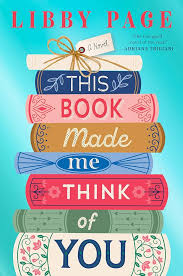
This Book Made Me Think of You by Libby Page
Hugs everyone! *Sassy wavy paws.
I am a dog. I contribute to the fabulous Anipal Times.
I write my impressions of the books my Momma reads to me each night. I hope you like my book review.
First, I want to explain my ranking system for the books I review.
Five paws: A must-read. So good that all my paws are waving.
So good that I borrowed a paw from Momma, who types for me, plus added all four of mine.
Four paws: A great read. Enjoy it in the tub.
Three paws: Eh. To read or not to read, if you have extra time, then read it.
Two paws: Likely skip it. Drags on, characters are silly, or just not a good read.
One paw: Seriously, skip it.
Welcome back to another Meet Me at the Bookshelf Book Review. Today we have a romantic offering called This Book Made Me Think of You by Libby Page.
The story involves Matilda Nightingale, a young woman who lost her husband, Joe, six months ago to an illness. They notified “Tilly” that before Joe died, he carefully chose one book a month for his beloved wife to collect at the local bookstore to help her overcome her grief.
Tilly heads over to the store.
Alfie, the store owner, takes a lot of abuse from Tilly, who wants the entire twelve books to be delivered in one swoop.
Alfie refuses.
Tilly trudges home with only that one book.
Even the bookstore cat, Georgette, thought Tilly made a scene.
Tilly carefully reads the note from Joe, included in her first book. It makes her heart sing. Joe chose a children’s book, which inspires Tilly to read again and engage in life, despite her crushing grief.
Rather than return to the scene of her humiliating fit and see Alfie again the next month, Tilly visits the public library and chooses several of her favorite children’s books. She stuffs herself into a reading tent intended for the local under-six kids set and reads her entire haul of books. Tilly doesn’t let any actual kids in to spoil or share her reading space.
One child reports a troll has taken over the castle.
When Tilly finally decamps from the tent, Alfie is hilariously there, just outside her tent, delivering overstock books to the library. Hangdog, Tilly follows him back to the bookstore to collect her second book.
The gorgeous bookstore cat, named Georgette, greets Tilly, sprawled across the office paperwork on the counter. She is the luxurious fourth member of the Book Lane team, and she revels in the attention from Tilly.Alfie and Tilly banter about, comparing cats and book lovers, stating they are similar by being fond of snacks, sun puddles and quiet time.
Georgette, named for the mystery author Georgette Heyer, purrs on while the pair list the books that feature cats like Alice in Wonderland, The Traveling Cat Chronicles, The Cat in the Hat, Breakfast at Tiffany’s, Carbonel and The Cat Who Saved Books.
Georgette senses a bond forming.
I alert Momma that it is time for my snack about this point in the adventure. Too much cat talk, I report.
The book-a-month choices by Joe give Tilly the confidence to travel, sing karaoke, read, and open her heart to life.
This book would make a splendid gift for birthdays and holidays. It has various book suggestions and updated titles packed amongst its pages.I give this book four paws up!The characters are quickly familiar, and the book is romantic.
Bonus: The bookstore cat would definitely be my buddy. I might chase Georgette once or twice, but she would forgive me.
I feel love will win the day, and I may get more purrs from my cat pals.
Try this book!
Thanks for joining me. Wuvu. See you next time at Meet Me at the Bookshelf.
*Sassy wavy paws
Dinner?
Good afternoon everyone. It’s Bart with TJ and Bart! We have our new column ready!
Dis is TJ. Bart has kept me in da dark about what dis column is about.
Bart: You can participate, TJ. It’s about you!
TJ: It is?
Bart: Yes. Why do you twy to eat da froggies and da lizards around da house?
TJ: Because I am protecting da house!
Bart: From froggies and lizards???
TJ: Okay, I am hungwy!
Bart: But why are you eating dem? Daddy feeds us all the time.
TJ: I am a natural hunter, Bart.
Bart: Not many hunters that are 22 pounds, TJ.
TJ: That’s twenty-one pounds more than you. Bart!
Bart: ‘Dat’s not twue!
TJ: The reason you don’t eat the fwoggies and lizards is they are all bigger than you.
Bart: Daddy! Make him stop!
TJ: You started this!
Bart: TJ, Daddy has had to pry those dead things from your mouth. You think he likes doing that?
TJ: He could let me eat them!
Bart: But then you would get sick!
TJ: He don’t know that!
Bart: I think we should stick with our doggie food. And get Daddy to feed us some of his.
TJ: You can do that. I still hunt for my meals. I can lives off the land.
Bart: Uh huh. So, can I have your doggie food?
TJ: No!
Bart: But if you are catching food outside???
TJ: Sometimes they get away.
Bart: Yeah, they do. I think that’s funny.
TJ: They think you’re funny because they didn’t know doggies could be dat small.
Bart: Daddy!
TJ: See you next time, folks!
Quote: Haruki Murakami on Cats
Whenever I write a novel, music just sort of naturally slips in (much like cats do, I suppose).
— Haruki Murakami, source unspecified.
World News Alert from My Big Bed: Animal Testing
I am a dog. I contribute to the fabulous Anipal Times.
Bloop. Bloop. News Alert. News Alert.
May, 2025. Several protest organizations protested, demanded, investigated, and pleaded until they were arrested for freeing corralled beagles and test animals. Yet these brave arrests led to historic, federal first-ever charges against the breeding and lab testing facilities mandated by the federal government’s National Institute of Health (NIH). This pressure caused a grand jury to indict many animal testing labs, and the authorities finally charged the breeders and labs with federal crimes.
News alert: lawsuits, transparency, public protests, subpoenas, and grand juries work.
The NIH’s last in-house Beagle testing lab has been permanently closed. The so-called government doctors face charges, jail time, and fines exceeding $35 million. Rescuers have saved thousands of animals and provided them with new homes. The end of government, taxpayer-funded animal testing has come.
*Sassy Appaws! Appaws!
People worldwide have shamefully bred and purchased animals, especially Beagles, for experiments involving drugs, flea meds, and other items. Governments worldwide require these tests before allowing an item on the market.
Using AI and other predictive methods makes the use of animals and animal testing unnecessary, obsolete, and cruel. The biggest offender was Envigo, which bred, held, corralled, and sold over 5000 beagles per the White Coat Waste Project for the world’s cruel use in experiments.
*Sassy sobs
Finally, in 2025, a change in government allowed our federal courts to subpoena those involved for four decades, 43 years, in testing animals in labs.
Dr. Dawn Marie Gau was indicted on seventeen felony charges in 2025.
Dr. Gau and others pleaded guilty to supplying dogs and animals worldwide for experimentation. Dr. Gau pleaded guilty to seven of the seventeen charges.
Dr. Dawn Marie Gau’s convictions in July 2026 include animal cruelty, conspiracy to violate the Federal Animal Welfare Act, and conspiring to violate the Clean Water Act.
The judge handed down sentences of 12 months in prison (suspended) and 7 years of supervised probation. These were the first ever federal convictions for animal exploitation and supplying worldwide. These convictions also freed 5000 dogs, and the $35 million in fines closed the Envigo breeding facilities.
Officials have permanently closed these NIH labs and breeding facilities, with more convictions expected.
*Sassy Appaws!
The only remaining NIH Federal Government run lab and Envigo breeding are both closed due to the convictions.
*Sassy Appaws!
The Beagle Freedom Project (BFP) also shut down a large testing lab in Nowata, Oklahoma, that provided animals for flea-med testing.
*Sassy Appaws!
As your world news alert dog reporter, I am thrilled to report that overall in 2025-26, these grand juries, subpoenas, and convictions compelled the NIH and Envigo to free all the laboratory animals immediately and end the breeding facilities.
Officials forced Envigo to shut down its dog breeding operations, yet they still sell research products.
Rescuers took the animals to a thirty-acre property called Freedom Fields to start the adoption and rehabilitation required by the federal court. Thousands of animals have found new homes through adoption.
*Sassy Appaws!
A massive effort to find these animals homes has been in full swing since June 2025 and continues today.
Dance paws!
We know bad labs and breeders will still be out there, but we hope jail time and threats of federal charges will stop them cold.
Join us in celebrating the demise of Envigo and the National Institute of Health’s animal testing and breeding labs.
Wave goodbye to the last in-house NIH animal testing lab and unnecessary, outdated, cruel experiments and worldwide sales policies.
If you can, adopt a Beagle and hug your pets.
High paws.
Over and out from Sassy, reporting for World News Alert from My Big Bed.
Da Nerve: A Column by Sassy
A cat ran into my house today! Up my stairs and then sat all snuggly in my window. Da bold nerve. I woofed my face off, but he had to be shown out. Keep walking, cat. Da nerve!
How do you tell if it is a dogwood tree? By its bark! Da nerve!
Knock knock. Who’s there? Kitten. Kitten who? Quit kitten around and open the door! Da nerve!
In Legally Blonde, 2001, Bruiser the dog rode around in a purse. Momma, where is my ride? Da Nerve!
What do dogs bark out before every meal? Bone Appetit! Hee Hee. Da Nerve!
Saw a pigeon looking at me the other day. Looking. Strutting. Looking. Strutting. Move along, weirdo. Those are my moves. Da Nerve!
What does a Scotty dog say when it is scared? I am Terrier-fied. Hahaha hee. Da Nerve!
Knock Knock. Who’s there? Feline. Feline who? Feline fine for Summertime! Da Nerve!
I like to chase autumn leaves and then eat them. What? Don’t you do that in the fall too? Da Nerve!
What do you call a doggy rock star? Su-Paw-Star! Pfft hee hee Da Nerve!
Knock knock. Who’s there? Roo! Roo who? Roo roo aroo arooooo let me go out in the yard. Da Nerve!
Quote: Jeff Valdez on Cats
Cats are smarter than dogs. You can’t get eight cats to pull a sled through snow.
— Jeff Valdez, source unspecified.
Badger Article 6

Badgers in September
The badgers in the UK have had a hard summer this year. The drought hit hard, causing many cubs and older badgers to perish because they could not forage for food or water.
Thankfully, we are now getting some rain, which will provide some relief to the suffering wildlife and allow them to get on with their normal behaviour for the time of year.
September is a month when badgers hope to have abundant food, with berries, fruit falling, acorns, alongside their earthworms and insects. It is a month of building up fat reserves—badgers will reach their heaviest, even double the weight from summer.
There will also be a lot of sett renovations and cleaning happening at this time of year. Collection of bedding to take into the sett to have warm, comfy sleeping chambers for the coming winter.
Alongside this, there are territorial relationships playing out, and sadly fighting, with some badgers being pushed out of the family groups, including youngsters moving on to their own patch.
Badgers can mate all year round because of delayed implantation, but August and September are key fertile months for badgers. Mating at this time of year will result in any eggs fertilized now not actually implanting in the womb until December, ensuring all cubs are born together in high winter (around February).
Let’s hope the badgers can prep well at this time and that the winter will not be as hard as the summer has been this year.
Our visiting badgers:


Grooming – Can Mum Cut It?
Ello der my pals I dus have received a propa dilemma lets me tell you …
“Dear Uncle Bob. Hello my momma is wonderful. She generally has me groomed, but I generally tends to acts silly and may have been asked to show myself out. Momma has, like me, ginormous, bootiful hair. Should I let her style and cut mine? Taking a chance. Signed Anonymously Adorable in Colorado.”
Oh, dear Anonymously Adorable, what a hairy dilemma!
I understand your problem. Your momma has ginormous bootiful hair and naturally you be finkin – surely sum dat styling talent must be able to be used on me.
Howefur, dear pal, there cud be a little issue – dat being your grooming record. If you’ve already been asked to show yourself out by the professionals, I is not convinced entirely dat you shud hands the scissors ofur to your momma and say, ‘have a go’!
Dat said, I says take a chance on the styling but bite the cut fur now. Starts small and sees how goes. And den, if Momma proves herself, you cud gradually and slowly increase her grooming privileges.
And always memba dat fur grows back (usually)!
What does our readers finks?
From your Agony Uncle Bob
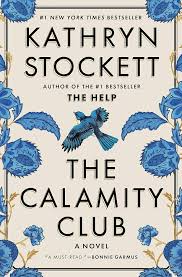
The Calamity Club by Kathryn Stockett
Hi everyone! *Sassy wavy paws
Welcome to another Meet Me at the Bookshelf Book Review.
Today we have The Calamity Club by Kathryn Stockett; the same author as The Help, which is a famous book and movie.
This book is excellent historical fiction and revolves around orphan homes in 1930s Oxford, Mississippi. Meg LeFleur, eleven, recounts this story: She was abandoned at the Lafayette County Orphan Asylum on Christmas Eve.
The companion story centers on the unmarried Birdie Calhoun. Her mom sent her to ask her socialite, younger, married sister for money to save the family home and acres.
Birdie learns her sister’s life is a lie but she, by chance, meets Charlie, a woman who has nothing to lose, and when they both discover they know Meg, Birdie and Charlie form the Calamity Club.
This unlikely Calamity Club forms a daring and dangerous plan to squeeze out a happily ever-after for the women.As one of the unadoptable older girls, Meg works in the Orphan asylum office, and daily tries to get her hands on the mail, hoping it will contain either word from her mom that she is coming back to retrieve Meg, or mail from orphan friends sent out to work at age 12. She dreams that she will have a happy life.
One day chaos erupts. Never letting a calamity go to waste, the orphan toddlers get out of their room and are running loose so Meg sets her eyes on the asylum mail bag. She finds both a letter addressed to a fellow orphan, Dorella, who torments her, and a brand-new Life magazine in the mail drop. She steals them.Dorella reads her letter aloud to the other orphans. Her mother says she is sorry she had to leave her and will make it up to her one day, and her siblings are fine.
Inspiration for the girls! Sassy appaws.
Meg devours the Life magazine. Included here are pictures showing pools, a woman holding a girl’s hand, and nice California sights. Meg sadly gets caught with the magazine, but she thinks of these images during the eight or more belt lashes the closet gives her. Meg thinks it was worth it.
Defiance has consequences, but now Meg knows there is hope. Drop everything and go get this sensational 634-page historical fiction book. It is a gem. The writing is elegant and engaging. The fast pace and finely drawn characters will leave you thinking about this book and Meg months from now.
It is a Wow! Some of the language is rough, but the author navigates the topics of orphaned children, poverty, sick authoritarian figures, and underestimated women beautifully . Saviors in Strange Places should be the name of this tome.
Momma read it to me over the period of a week. I loved it.
Hope shines out from the dark. I give this book five paws way up!
This heartbreaking tale will inspire and challenge you, and make you feel lucky. Momma always says if you could run to a hill of your problems, or choose anyone else’s, you would surely choose your own. I said, how about if I just choose to run up the hill and around a lot?
I hope you love it. I bet, like The Help, they will make it into a movie. Thanks for spending time with me!
See you next time at Meet Me At The Bookshelf. Wuvu *Sassy wavy paws.

