An army of lions commanded by a deer will never be an army of lions.
— Napoleon Bonaparte
Category: Columnists
This category is for a columns page that shows all the columnists posts.
Dancing in the Dark
Guest Post–Angel Alma
Friday the 16th of January was a special day in Lapland. For the first time in roughly six weeks, dawn broke. It peeked above the horizon at 12:02 p.m. and disappeared at 12:43 p.m. This happened in Utsjoki, in the northernmost part of Finland.
Winter nights are long in other parts of our country too. It’s not totally dark all the time, as the polar night season, which we call “kaamos,” is also bluish and in the south even light—during the few daylight hours.
This remarkable season offers moonlight, stars on clear nights, and the captivating auroras. Aurora Borealis, the northern lights, gives a display worth watching.
People in ancient times had various explanations for the magical glowing green, blue, yellow, and red lights which filled the sky, dancing, waving, and flickering.
Many folklore stories connect auroras with blood or dead human souls. People also saw them as signs of something big happening. In Finland they are called “Revontulet”, “repo” being an old name for a fox. “Tulet” means fires. So Firefoxes were running through the sky, swishing their tails, red sides touching trees and snow.
Scientists have been interested in auroras since early days, trying to explain their origin. Nowadays we know solar winds interacting with Earth’s magnetosphere cause them. Scientists still eagerly study them, and more secrets remain to be discovered.
No wonder auroras are one of the most admired tourist attractions in Lapland. Finland itself provides excellent observation locations, due to its northern location. It’s also more or less inhabited even in the remote areas. You can see auroras even in April, before it becomes too light.
Mun saw her first Auroras in Helsinki in the 1990s on New Year’s Eve. She went outside with friends during a party at midnight to wish each other a Happy New Year. Green lights were waving up in the sky, like silent fireworks.
For hunting Auroras, you have modern equipment to help. Just check one of the several Aurora alert apps on the phone or a meteorological site. Choose a wide, open place facing north, without too many city lights. Mum used to drive to the nearest fields, but lakesides are also good for spotting.
Aurora hunting is not always a success. Mum drove toward country regions for approximately thirty minutes during the nighttime, solely to observe stellar displays against the dark heavens. Driving back and going to sleep.
Sometimes Mum can see them behind the house, even from her bedroom window. If it’s too cold or too late, she stays in bed dreaming of firefoxes running over the dark winter sky, swishing their tails.
You can find more information about Auroras in Finland, for instance, on these internet sites:
Ursa Astronomical Association, Finnish Meteorological Institute, visitrovaniemi.fi and visitfinland.com
Quote: Elyria on Cats
In the small cathedral of muscle and instinct,
the hind limbs do not strike—they harvest.
Not in anger, but in memory of a hunt
written long before the first house was built.
― Elyria
Paws to That, Callie Cat!
I’m Callie Cat, and we need to discuss what you humans call a ‘water bowl.’ Every morning, you plunk it down with that self-satisfied grin.
‘Fresh water, Callie!’ you chirp. You think because it’s clear and wet, it’s acceptable? Please. By 10:00 AM, that bowl isn’t a drink; it’s a stagnant pond of despair. I lean in, whiskers twitching. It’s a gamble every time. If the water level drops even a millimeter below the rim—just a fraction of an inch—the bowl is officially ‘empty.’ I will sit next to it and scream the song of my people until you rectify this injustice. You look at the bowl and see 95% capacity; I look at it and see a desert wasteland.
Also, if the bowl is too narrow, my whiskers scrape the sides. But if you really loved me, you’d leave a half-full glass of ice water on the in the bowl. That’s the premium stuff.
Now, be a dear and top it off. I can see a microscopic hair floating near the left edge, and frankly, I am disgusted.
With a Dog AND a Cat, Every Day Is Fun: Book Review
With a Dog AND a Cat, Every Day Is Fun is an anecdotal manga written and drawn by Hidekichi Matsumoto, following the everyday antics of the mangaka’s dog and cat, and sometimes lizard.
Inu is a fun-loving little dog with a heart of gold and a giant personality. Neko is a grumpy cat who’s a softie at heart. And between them, they keep Matsumoto very busy and very entertained.
This manga is relatable, humorous, and adorable, with a unique style that sets it apart from most manga, and includes photographs of Matsumoto’s real-life dog and cat in each volume, so you can see the faces behind the antics.
As of now, there are eight volumes available in English, with a ninth promised by Matsumoto, so it’s also not a long manga to get into. It’s great for busy pet owners who just want something cute and funny to relax to.
Approved by my cartoonist, Sunny, and myself.
I give this manga two paws up! Try it if you get the chance!
The Fearsome Australian Drop Bear

The Drop Bear (Thylarctos plummetus) is a large, arboreal marsupial native to the forests of Australia. A distant relative of the koala, it is described as a heavily built animal with powerful forearms for climbing. It is roughly the size of a large dog or leopard, with coarse mottled fur and a vicious bite.
Drop bears inhabit dense forests and tall woodland along Australia’s Great Dividing Range. From their elevated perches they wait silently in the thick canopy then drop onto unsuspecting prey walking below. The impact alone can stun a victim, allowing the drop bear to subdue it quickly with claws and teeth. The drop bear may haul the carcass up into the branches to finish eating it later.
Although drop bears prefer medium-sized mammals such as kangaroos or wallabies, bushwalkers are warned to remain alert beneath heavily wooded areas. Not only is the drop bear itself dangerous, but their food caches can fall and cause serious injury.
A variety of folk remedies can be used to prevent drop bear attacks. Vegemite behind the ears, forks worn in the hair, or adopting a convincing Australian accent are often recommended but none of these tactics have ever been scientifically proven.
In case you haven’t guessed, the Drop Bear is a cryptid. Australians tell the tale of the drop bear to tourists who are already a little spooked about Australian wildlife.
Quote: H.P. Lovecraft on Cats
Through all this horror my cat stalked unperturbed. Once I saw him monstrously perched atop a mountain of bones, and wondered at the secrets that might lie behind his yellow eyes.
— H.P. Lovecraft, The Rats in the Walls
Weather Article 1
#Weathercat:
My mummy and I both love the weather. She maintained a weather diary using paper for many years during her youth; now, our garden features a weather station we’ve had for quite some time. She finds it so interesting, exciting, and scary.
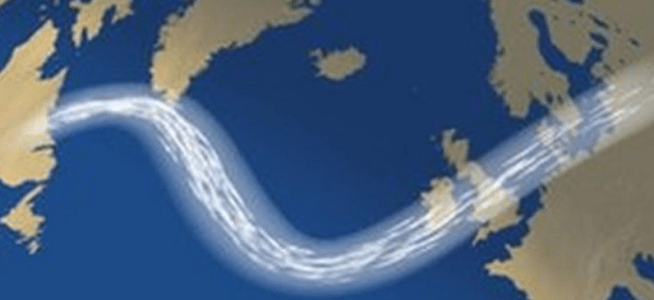
The UK’s weather feels the impact of its island status plus its geographical position. We are Atlantic driven but depending on the weather pattern setup and position of the jet stream, we can bring in weather from other directions.
Jet steam:
The jet stream is a high-altitude river of wind (5-7 miles up) that steers UK weather, blowing west-to-east, with its position dictating whether the UK gets mild, wet Atlantic weather (when it’s south of the UK) or colder, drier spells (when it’s further north). A fast, straight jet stream brings unsettled, stormy conditions by pulling low-pressure systems towards the UK, while a weaker, buckled jet stream can lead to blocked high-pressure systems, causing longer periods of stable, dry, or even cold weather, depending on the air masses involved.
When we have a southerly wind in the summer, we have experienced dust storms up from the Sahara. A few years ago, when working in London, the entire city seemed to turn red and there was dust everywhere—it was quite an experience that Mummy loved.
If the winter weather pattern has high pressure blocking, we can then get the Beast from the East, which brings freezing temperatures and snow in from the East.
The cold spell we experienced over Christmas and the start of the year 2026 was driven from the North because of the position of the Scandinavian blocking high pressure. This cold spell has been across Europe, and Lapland has experienced record low temperatures of -42.8c. Mummy has visited Lapland several times, and the lowest she has experienced is -30c and that was VERY cold.
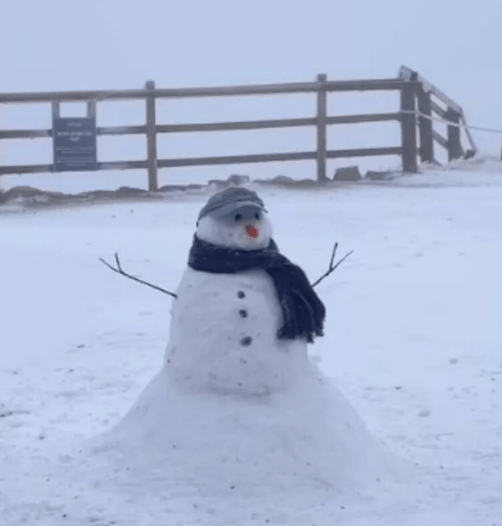
Do you have a favourite weather? Our mummy’s is snow, she just loves it and finds falling snow and the sparkle and crunch of laying so super special.
We will delve into some more weather facts and types of weather in future articles.
Goldie
Goldie, a Golden Retriever, was having a regular visit at the vet. The checkup was mostly fine, but when Dr. Sarah looked at her clipboard, she sighed.
“She’s getting a little heavy,” she said to Goldie’s owner. “No more table scraps, perhaps reduce the… what do you call them? The drive-thru pup cups?”
Goldie gasped. She sat up, her ears alert. Wait. She placed a heavy paw on Dr. Sarah’s knee, looked at her, and barked, “Why?“
Dr. Sarah explained, “Pup cups, while delicious, are just high-fat whipped cream. Think of them as a very rare treat, not a daily requirement.”
She patted her head. Goldie looked at her owner, her expression full of disappointment.
Dr. Sarah explained, “If you consume it with restraint, it’s fine. Perhaps, as a treat, once every few weeks. It shouldn’t become a habit with every coffee shop visit.”
Goldie let out a long sigh, dropping her chin onto her paws.
On the way home, her owner drove past the local café. The barista extended a small pup cup from the car window upon its halt. Goldie felt shocked. She glanced toward her owner, then towards the barista.
She quickly devoured the treat in three seconds, whipped cream covering her nose. It was worth the, well, moderation.
She sat wagging her tail, already planning her next, very “moderate” visit to the vet.
Quote: Napoleon Bonaparte on Horses
You can not lead a battle if you think you look silly on a horse.
— Napoleon Bonaparte
 The Anipal Times