
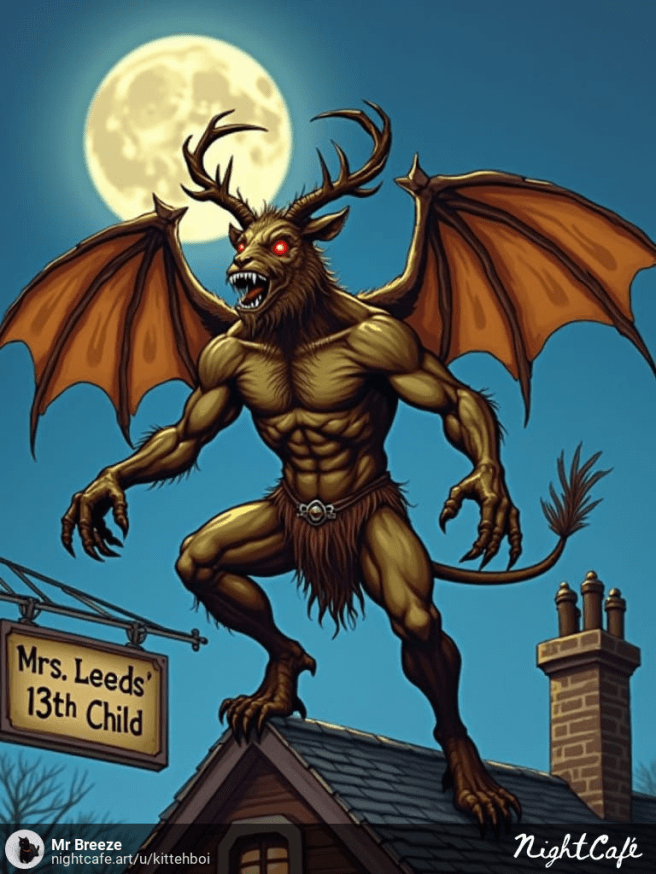
Imagine if you will…
You are camping with your friends in the Pine Barrens of New Jersey. It’s an early fall evening. There’s a chill in the air and the moon is full.
As you sit around the campfire telling ghost stories, there is a sudden thrashing in the blueberry bushes. Something moves quickly toward your campsite. Wait, were those antlers? Is it a deer this late at night?
No, it is not a deer. It is South Jersey’s oldest cryptid, the Jersey Devil himself!
In 1735, decades before the Revolutionary War, Mrs. Leeds had her 13th child. As the boy was born, Mrs. Leeds cursed him. For a time, he seemed like a normal baby. Then one evening Mrs. Leeds entered the nursery to find her baby had grown hooves, wings, and vicious fangs. With a blood-curdling shriek he flew up the chimney and disappeared into the night!
The Jersey Devil has been sighted many times over the centuries, and he is responsible for many strange goings-on. Campers see glowing eyes in the brush. Children go missing, livestock is killed, and banshee-like wails are heard through the pines. He has even been seen on Long Beach Island cavorting with mermaids.
Today there is a little tavern on Leeds Point. The lights of Atlantic City are visible across the bay. And on stormy nights you may hear the Jersey Devil clip-clopping across the tavern roof.


