Animals and Poison Ivy

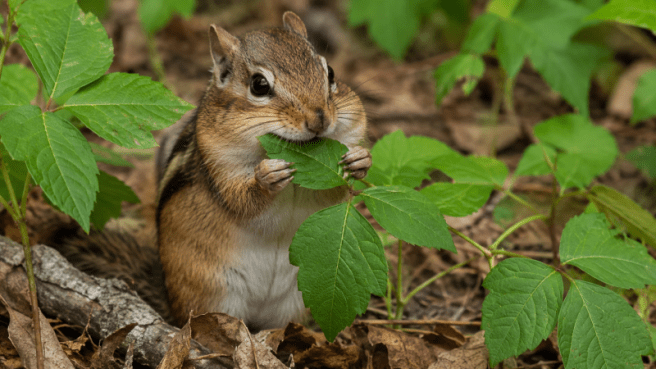
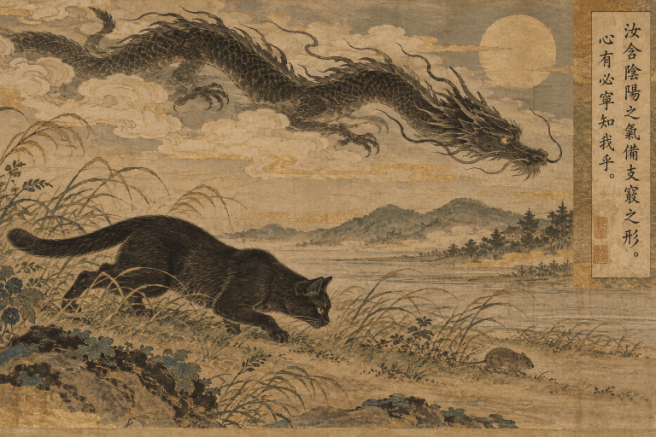
Chipmunk Eating Poison Ivy
Chipmunk Eating Poison Ivy (AI)

Animals don’t usually get poison ivy. However, the active ingredient, urushiol, is highly allergenic to most humans.

Non-primate species can roll in poison ivy and at most get some irritation. This means that cats and dogs can transfer the oil onto their humans without getting contact dermatitis themselves.

Mangoes, cashews and pistachios are popular foods that contain urushiol.

Mangoes: The oily skin, rind, tree sap, and leaves of the mango plant contain urushiol. Only the flesh is safe to eat. It’s not advisable to bite into an unpeeled mango.

Cashews: Raw cashew nut shells are coated in caustic oils similar to urushiol. This is why cashews are never sold in their shells. Cashews are a superfood and very popular in vegan recipes. They must be roasted to neutralize the toxin before you eat them. Unfortunately, the shells are removed by hand, and the workers get terrible burns.

Pistachios: Pistachio shells can contain trace amounts of urushiol, though usually not enough to trigger an allergic reaction.

Urushiol is not a universal poison. Different species tolerate it very differently. A chipmunk may eat poison ivy without a reaction, a cat may carry it home on its fur, and a human may break out in hives after an unnoticed contact. Nature sometimes spares the who walks in the leaves and punishes the person who pets it.

As an aside, this difference is Why Animal Testing is Illogical.

The Fearsome Australian Drop Bear

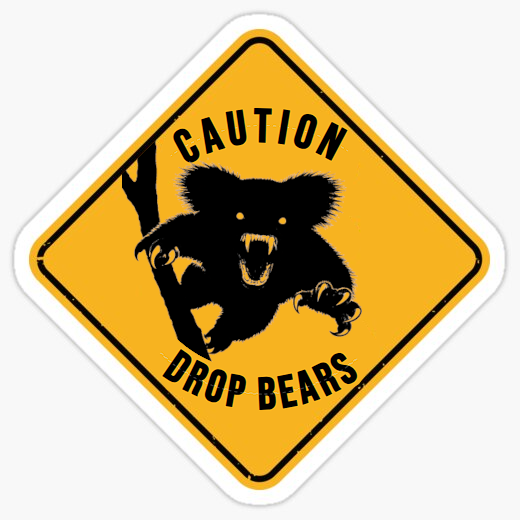
Caution: Drop Bears
Caution: Drop Bears

The Drop Bear (Thylarctos plummetus) is a large, arboreal marsupial native to the forests of Australia. A distant relative of the koala, it is described as a heavily built animal with powerful forearms for climbing. It is roughly the size of a large dog or leopard, with coarse mottled fur and a vicious bite.

Drop bears inhabit dense forests and tall woodland along Australia’s Great Dividing Range. From their elevated perches they wait silently in the thick canopy then drop onto unsuspecting prey walking below. The impact alone can stun a victim, allowing the drop bear to subdue it quickly with claws and teeth. The drop bear may haul the carcass up into the branches to finish eating it later.

Although drop bears prefer medium-sized mammals such as kangaroos or wallabies, bushwalkers are warned to remain alert beneath heavily wooded areas. Not only is the drop bear itself dangerous, but their food caches can fall and cause serious injury.

A variety of folk remedies can be used to prevent drop bear attacks. Vegemite behind the ears, forks worn in the hair, or adopting a convincing Australian accent are often recommended but none of these tactics have ever been scientifically proven.

In case you haven’t guessed, the Drop Bear is a cryptid. Australians tell the tale of the drop bear to tourists who are already a little spooked about Australian wildlife.

Video: The Tigers of Scotland

Narrated by Iain Glen, this independent natural history documentary investigates the Scottish Wildcat, their endangered status and the conservation efforts being undertaken to prevent their extinction.

Scottish Wildcats are affectionately known as Highland Tigers. The name originates from their striped fur and that they’re not only one of Britain’s largest predators, but the UK’s only “big cat”.

Originally released on Netflix in 2018, this is the first time the full length, unedited version has been published, and in 4K.

Shooting Craps: The Wombat

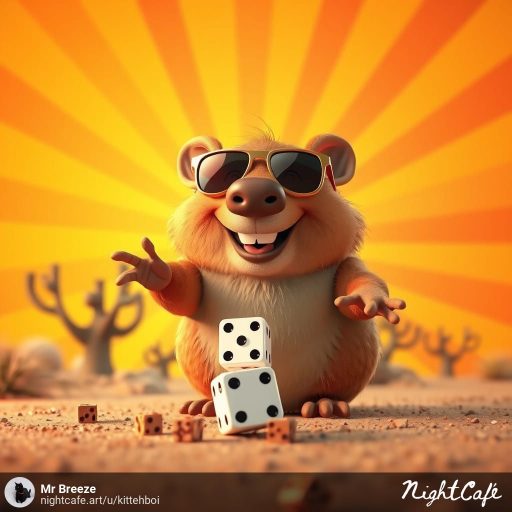
Wombat Shooting Craps
by @kittehboi and Nightcafe.

Wombats are cute little Australian animals. Their long teeth make them look like rodents, but in reality they’re marsupials, relatives of koalas and kangaroos.

Marsupials differ from mammals like dogs and cats in a number of ways, but the most important way is that wombat fetuses have a simple placenta that doesn’t provide enough nutrition for a large fetus. The joeys have to get out so early that they can’t live outside the mother’s body. After the joeys are born they have to make the arduous climb into their mama’s special pouch, where they will keep warm and drink milk until they’re big enough to live outside.

Wombat pouches are unique among marsupials. While kangaroo pouches open at the top, wombat pouches open at the bottom. Wombats like to dig. If they had a normal pouch, it would scoop up dirt.

According the the Department of Natural Resources and Environment Tasmania, bare-nosed wombats are about the size of a medium size dog.

Bare-nosed wombats average 1 m [39 inches] in length and 27 kg [50 pounds] in weight yet can reach up to 1.2 m [47 inches] in length and up to 35 kg [77 pounds] in weight. The Tasmanian wombat is not as large or bulky, averaging 85 cm [33 inches] in length and 20 kg [48 pounds] in weight, while the Flinders Island wombat is smaller still averaging only 75 cm [30 inches] in length.

Now about the dice.

Wombats have particularly long, flexible intestines. It takes up to 12 days for poop to traverse the wombat’s digestive tract, and it is wrung dry during the trip. The result is that wombat poop is unique: it’s cubic like dice. No other animal in the world poops dice!


Why Animal Testing is Illogical

Animal testing is illogical. Although humans and many other species have similar DNA, and though most organ systems are similar, subtle differences make using animal models to test food, drugs and cosmetics unreliable. Here are just three ways animals don’t react the same as humans.

Rats are known to be more resistant to a certain mushroom toxin than humans. Some mushrooms, notably the Fools webcap, contain a nephrotoxin called orellanine. Rats can eat mushrooms that are deadly to humans.
Feeding a food to animals is not a valid test.

In 2006 a new immune system boosting drug, TGN1412, which had been successfully tested in animals, went to human trials. The subjects were only given the equivalent of 1/500th the safe dose for “non-human primates,” macaques. A single amino acid difference between macaque and human DNA caused violent immune system reactions in humans. Within 90 minutes of the injection, the test subjects suffered searing pain. Within a few hours they suffered multiple organ failure. On a positive note, all the test subjects survived.
Giving a drug to animals is not a valid test.

Dogs and cats don’t usually get poison ivy. Most humans are highly allergic to the active ingredient, urushiol oil. Non-primate species can walk through poison ivy and at most get some irritation.
Applying cosmetics to an animal’s skin is not a valid test.

Fortunately, modern medicine has a number of alternatives to animal tests. One promising technology is Organ Chips, tiny devices about the size of a USB memory stick that contain living human cells.

Lots of drugs don’t make it through the animal trials, but who knows whether the drug companies have thrown away the Magic Bullet simply because it didn’t work on animals?

The Cat Who Ate the Sun

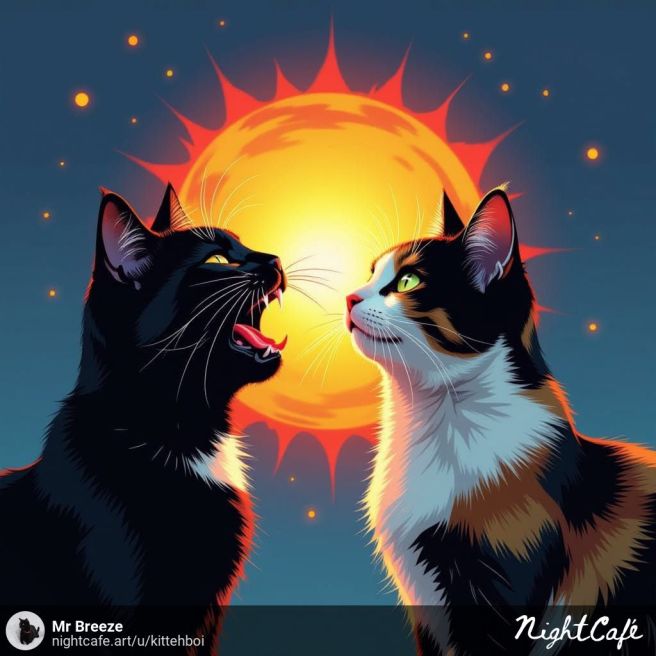
The Cat that ate the Sun
The Cat who ate the sun.
by @kittehboi & Nightcafe Studio.

“The Cat Who Ate the Sun” is a mythical story explaining the origin of tortoiseshell cats.  According to the legend, the sun became a black cat to visit the Earth. When the sun left, it left behind its fire in the patches of red and orange in the torties’s coat.

This is why Tortoiseshell cats are so popular, because they seem to carry a spark of the sun itself.

Dogs Can Fly!

Did you know that rescue dogs in the UK were trained to fly a real airplane?

In 2016 Sky 1 aired a TV series called Dogs Might Fly. Twelve dogs underwent acting challenges, made music videos, and even acted in a live play.

Three of the dogs made it to flight school. With special equipment and training, the dogs learned to steer the plane, keep it level, and follow simple flying instructions. Two dogs were able to fly a Cessna 172 in a figure 8.

Good dogs!

The dogs didn’t handle takeoff or landing, but they did control the plane in the air. I think they earned their wings!

Call Me the Breeze

Purrrr, It’s Mr. Breeze here. Since I’m going to be writing for The Anipal Times I thought it would be a fine thing to post an intro.

In 2007 when I was a few months old I escaped from my home and got lost. I was begging at random doors for food. Then I met a stripey cat. She was eating all kinds of stuff so I followed her home. I hung out under da pine tree watching her humans barbecue. They fed me grilled shrimp because I was getting skinnier by da day. I named myself “Mr. Breeze” because I blew into their yard.

Da stripey cat’s humans called around everywhere trying to find my family. Da lady walked me around da neighborhood asking everybody if I was theirs. No dice. Who doesn’t look for their sweet panfur???

Da lady had been in a car accident and didn’t feel she could make a 20 year commitment to a young cat so she gave me to a rescue along with a ton of cash. I was kind of sad but da rescue lady was very nice and I made lots of barn cat friends.

A couple of months later da rescue lady to a pet expo.Da rescue lady was holding me like a baby, cooing and tickling my belly. MOL!! Suddenly da lady and my daddy showed up. I was so happy to see them and they adopted me right away. I was so happy to see my pine tree again. And then we went inside and there was the stripeycat and a spicy black cat. Their names were @sisfurcats Bugs and Chilipepper!

When I was young I liked to play sticks wif da lady. I liked to hang out on da front porch looking handsome for da neighbors. I sometimes hunted. I climbed trees like a big panfur. I even liked to play in da snow!

As it turned out, I was very photogenic. Dis photo motivated da lady to get me social media accounts. In 2009 I landed on twitter and found lots of anipals here! I even started my own bloggy, Call Me The Breeze.

I was invited to DJ at Frugal Dougal’s #pawpawty in 2009. I made friends there who are still friends to this day. I’ve been DJing at #nipclub on X since the start in 2010. I am involved with the sporadic #NipclubExtra on X and the blog. I also DJ at #pawgaritaville on X and help with the blog. I run #chilipawty on X and the blog (with lots of help from @tweetingtruman and many others) and I help @GeorgetheDuck out with #catmaseve on X and the blog. I love music! It’s a huge bonus that some pawties benefit animal charities.

I’ve also helped da lady learn Photoshop and GIMP.

I loved my sisfurs Bugs and Chilipepper. I was especially sad when Chilipepper went OTRB. I walked around da house crying for her. When Bugs went OTRB da vet gave me my very own kitten, @sisfurcats Ragamuffin. (2016)

I loved to snuggle my daddy. And I trained da lady to give me treats when I held out my paw. I loved to meet new people and give them headbutts. I even got to meet some of my [@kittehboi483] Pokémon GO pals in da park. I wasn’t keen on the car but so many scritches!!

In 2024 I went OTRB after a long illness. @Sisfurcats Ragamuffin still misses me. And of course my humans do too. My mommy wants to get an older cat for her. Hopefully they can become friends. I’ve been talking to the Cat Distribution System about it.

I still hang out wif my pals on twitter/X. DJing, of course. I like learning about new (to me) music to make playlists for pawties.
I make graphics with GIMP, and and enjoy learning how to use effects for pawty banners. Check out Put Your Paws in da Air for some of my work
I’m learning to make AI images with NightCafe Studio. It’s tempting to let @nightcafestudio design the pawty banners, but I like using GIMP too.
I’m still blogging for #pawgaritaville, #nipclubextra, #OwensBlackpaw, and #catmaseve.
I have fun putting ChatGPT through its paces. I sporadically post interesting conversations on my Just Some AI blog.

I make da lady read LOTS of books! Dis da books I making her read.

My favorite book is “Will My Cat Eat My Eyeballs?” by Caitlin Doughty. This humorous book answers questions like “Why Don’t Animals Dig Up All The Graves?” and “Can I Give Grandma A Viking Funeral?” Makes a perfect gift for morbid children.

I’m glad you could join me on The Anipal Times. We are going to have so much fun!

The Jersey Devil

The Jersey Devil
Mrs. Leeds’ 13th Child

Imagine if you will…

You are camping with your friends in the Pine Barrens of New Jersey. It’s an early fall evening. There’s a chill in the air and the moon is full.

As you sit around the campfire telling ghost stories, there is a sudden thrashing in the blueberry bushes. Something moves quickly toward your campsite. Wait, were those antlers? Is it a deer this late at night?

No, it is not a deer. It is South Jersey’s oldest cryptid, the Jersey Devil himself!


In 1735, decades before the Revolutionary War, Mrs. Leeds had her 13th child. As the boy was born, Mrs. Leeds cursed him. For a time, he seemed like a normal baby. Then one evening Mrs. Leeds entered the nursery to find her baby had grown hooves, wings, and vicious fangs. With a blood-curdling shriek he flew up the chimney and disappeared into the night!

The Jersey Devil has been sighted many times over the centuries, and he is responsible for many strange goings-on. Campers see glowing eyes in the brush. Children go missing, livestock is killed, and banshee-like wails are heard through the pines. He has even been seen on Long Beach Island cavorting with mermaids.

Today there is a little tavern on Leeds Point. The lights of Atlantic City are visible across the bay. And on stormy nights you may hear the Jersey Devil clip-clopping across the tavern roof.