Guest Post-Alma

Arctic Birds Migrating–A Spectacle To Enjoy

Southeast Finland is ideally situated if you want to watch the arctic birds’ spring and especially autumn migration.

For instance, waders nesting in the North migrate in the springtime following the south coast of the country, but also those various species of geese.

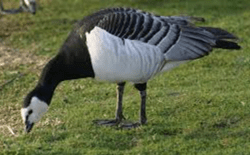
Perhaps the best-known migration show for common watchers, besides the “serious” birdwatchers, is the autumnal migration of Barnacle geese. Barnacle geese nest mostly around the Barents Sea, located north of the coasts of Norway and Russia.

They fly over Finland to their wintering areas around the North Sea. (Nowadays, Finland also has their own resident population, filling lawns in the parks of Helsinki, but that’s another story…).

However, in the last 20 years, more Barnacles started taking a stopover in SE Finland, to rest and eat before continuing their journey, usually in October. They changed habits a bit by surprise, landing in front of astonished humans.

Farmers weren’t, nor are joyful, using, for example, streamers, to frighten unwelcome visitors from fields. 

Earlier, it was popular for birdwatchers to travel to Northern Karelia near the eastern border, where you could watch migration from a high hill and cover even the Russian side near Lake Ladoga, if the birds took that route.

A small town near the border even organized special Geese Weeks, where they erected a big tent with a stove to grill sausages and keep warm. 

In October, the weather can be chilly, and as the Geese Migration needs a northern or northeastern wind, warm clothes are essential. Not to mention the sometimes hours of standing and waiting in wind and rain, watching the empty sky.

Mum has been there to see the phenomenon jokingly called “suffer birding”. However, when the crowd approaches from afar, soaring above your person while honking, one simply admires. Serious watchers, of course, count and mark the species in exact numbers. 

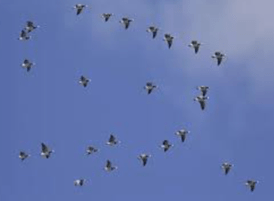
Nowadays, you can watch the fall migration more easily. Just walk outside, and if you are lucky, listen to the honking approaching. Observe the sky, and they approach! Or visit the nearby fields, where geese fill their tummies and gather strength. 

Then one day the wind turns and starts blowing from the right direction. Birds become restless, flying a bit there and back. Finally, the urge and instinct make them rise and drift into a formation. They fly higher and leave. Until next spring.

Feline Infectious Peritonitis (FIP), Part Two

This is the second of a two-part series about FIP treatments.

Until recently, no treatment for FIP was possible, and cats with the disease died within days to weeks. Because of the COVID pandemic, interest in coronaviruses increased, resulting in the development and availability of several antiviral drugs. People commonly use four: GS-441524 and its precursor remdesivir, molnupiravir (Lagevrio), and Paxlovid (nirmatrelvir/ritonavir).

The mainstay of treatment is GS-441524. Its mechanism of action is premature RNA chain termination in the virus, preventing viral replication. Doctors give it by mouth once or twice a day. The dose is 15 mg/kg/day given once daily or 20 mg/kg/day divided into two doses if there is neurological or eye involvement. A kilogram (kg) is 2.2 lbs.

In cats that cannot swallow, the veterinarian can administer remdesivir subcutaneously or the medication can replace the first few IV doses. Remdesivir uses the same doses as GS-441524. The optimal duration of treatment is under investigation, but for now, 84 days (12 weeks) of therapy are standard.

There are ongoing studies investigating shorter treatment (6 weeks); the initial results on a group of twenty cats have been favorable. Medication presents substantial costs, and a twelve-week treatment might prove difficult to finance. Therefore, vets plan to assist owners in shortening treatment when they can.

If a cat is clinically doing well (alert, eating) and the lab results have tended towards normal by four weeks, discontinuing treatment at 6 weeks may be reasonable. Once the treatment ends, the veterinarian should examine the cat within one or two weeks, regardless of how long the therapy lasted.

If your cat’s symptoms come back, schedule an earlier check-up, as relapses may occur after 12 weeks of treatment. Research shows that 80% of cats go into remission following treatment. Table 1 shows key milestones for cats undergoing treatment with GS-441524.

AbnormalityExpected time to resolution
Fever/inappetence2-7 days
Effusions1-2 weeks
Blood count abnormalities2-3 weeks
Elevated bilirubin2-3 weeks
Albumin: globulin > 0.66-10 weeks
Eye and neurologic abnormalitiesImprovement by day 5, resolution within 2 weeks


If cats respond poorly to GS-441524 (failing to reach clinical milestones on time), you can also add Paxlovid. It works differently from GS-441524 and may provide a synergistic effect.

Initially, veterinarians administered Molnupiravir as a rescue drug for cats not responding to GS-441524 (not reaching treatment milestones on time), but recent studies use it as the primary treatment. It works by causing multiple mutations in the replicating virus, resulting in its eradication. The dose is 10-15 mg/kg given twice a day.

Since it’s designed for humans, this dosage form is also impractical and can decrease appetite. As a result, it might be necessary to use appetite stimulants or antiemetics. It causes birth defects in rats and cartilage defects in growing humans. Treated cats exhibit folded ear tips, broken whiskers, and flaky skin.

Cats may also experience muscle wasting and elevation of ALT (Alanine Aminotransferase, present in the liver, muscle, kidneys, and other organs).

Paxlovid (nirmatrelvir/ritonavir) is two drugs in one. Nirmatrelvir inhibits RNA copying enzymes, and ritonavir slows the degradation of nirmatrelvir in the body. Doctors use it along with GS-441524 or molnupiravir if the response is incomplete. You must be careful if the cat is taking medications eliminated by the same pathway, and you may need to adjust their doses.

Supportive measures include appetite stimulants, pain meds and even a feeding tube if the cat is unable or unwilling to take medications by mouth.

With effective treatment for FIP, inappropriate use of the drugs has inevitably occurred. Reports show that whole litters of kittens received treatment because a vet diagnosed one kitten with FIP or even administered preventative treatment.

Though a Feline Enteric Coronavirus (FeCV) vaccine is available, the American Association of Feline Practitioners does not recommend it. You must vaccinate the cat before FeCV infects it, but this is impossible because many kittens contract the infection before they can receive the vaccine at 14 weeks old. Further, immunity wanes with time.

There is currently work ongoing on an effective vaccine.

Finally, a word on the FIV on Cyprus. Reports conflict regarding the prevalence, though FIP is more widespread elsewhere. One source estimates that 30% of the feral cats in Cyprus have died of the disease. Twenty-eight percent of the affected cats have nervous system involvement, compared to 14% of FIP cats elsewhere. The malady infects felines of every age, not merely juvenile ones.

DNA sequencing has shown that the virus responsible is a recombination between the feline and canine coronaviruses.

The alarming property of this virus is that it is transmissible between cats. Folks from the United Kingdom and Europe have adopted feline companions while on holiday in Cyprus. At least one cat like that has developed FIP. It presents a risk regarding worldwide, European spread of the mutant virus.

Footnotes and further reading/listening

  1. Conference Proceedings: Am College Vet Internal Med Forum; ACVIM 2023. Sally J. Coggins
  2. Pedersen, N. et al., J, Feline Med Surg. 2019 Feb 13; 21(4):271-281. Efficacy and Safety of the nucleoside analog GS-441524 for treatment of cats with naturally occurring feline infectious peritonitis.
  3. Coggins, S.J. et al., J Vet Intern Med. 2023 Sep-Oct; 37(5): 1772-1783. Epub 2023 Jul 13. Outcomes of treatment of cats with feline infectious peritonitis using parenterally administered remdesivir, with or without transition to orally administered GS-441524.
  4. Taylor, S., Talk at the International Society for companion Animal Infectious Disease meeting 2024. An Update on Treatment of FIP Using Antiviral Drugs in 2024: Growing Experience but Still More to Learn.
  5. Coggins, S.J., Talk at the American College of Vet Int Med meeting 2023. Updates in Feline Infectious Peritonitis Treatment.
  6. Felten, S. et al., J Feline Med Surg. 2017 Apr; 19(4): 321-335. Detection of feline coronavirus spike gene mutations as a tool to diagnose FIP.
  7. Sorrell, S., Tasker, S., Taylor, S., Barker, E., Gunn-Moore, D.: Feline Infectious Peritonitis (FIP) Information for Cat owners. Stokes Pharmacy website: https://www.stokespharmacy.com/wp-content/uploads/2024/05/Pet-Owner-Brochure-Printable-Version.pdf
  8. Thayer, V. et al., J Feline Med Surg. 2022 Sep; 24(9):905-933. 2022 AAFP/Every Cat Feline Infectious Peritonitis Diagnosis Guidelines.
  9. https://bova.vet/
  10. https://www.stokespharmacy.com/stokes-bova-partner-for-feline-infectious-peritonitis-treatment/
  11. https://www.stokespharmacy.com/fip/cat-owner-resources/
  12. https://bova.vet/fip-resource-page/#FIP-Webinars
  13. https://vcahospitals.com/know-your-pet/feline-infectious-peritonitis
  14. https://veterinarypartner.vin.com/default.aspx?pid=19239&id=11618072
  15. https://www.merckvetmanual.com/cat-owners/disorders-affecting-multiple-body-systems-of-cats/feline-infectious-peritonitis-fip
    16.Merck Veterinary Manual, 11th edition, 2016, pp. 782-790
    17.https://www.wormsandgermsblog.com/tags/feline-infectious-peritonitis/
  16. https://ccah.vetmed.ucdavis.edu/sites/g/files/dgvnsk4586/files/inline-files/Inappropriate%20use%20of%20GS.pdf
  17. https://www.biorxiv.org/content/10.1101/2023.11.08.566182v3.full.pdf . Attipa, C., Warr, A. et al. BioRxiv preprint 3 Sep 2024: Emergence and spread of feline infectious peritonitis due to a highly pathogenic canine/feline recombinant coronavirus.
  18. https://thewebinarvet.com/videos/what-you-should-know-about-fcov-23-and-the-outbreak-of-fip-in-cyprus
  19. Gao, Y. et al: Virus Research V 326, March 2023: An updated review of feline coronavirus: mind the two biotypes

Feline Infectious Peritonitis (FIP)

This is the first of a two-part series about FIP.
Part one outlines what FIP is and several methods used for a possible diagnosis.

FIP is a viral disease of cats that was almost uniformly lethal until recently. A recently discovered effective treatment is now available to veterinarians in the United States, Canada, Australia, Japan, and most of Europe.

The virus responsible for FIP is Feline Infectious Peritonitis Virus (FIPV), which is a mutated form of Feline Enteric Coronavirus (FeCV). FIPV is an RNA virus, so it encodes its genetic information in RNA instead of in DNA. It is a common misconception that FeCV is the same virus responsible for causing COVID in humans. The SARS-CoV-2 virus, while also a coronavirus, differs from FeCV, which does not cause COVID.

The current consensus is that dogs and cats do not develop disease from infection with SARS-CoV-2 and do not transmit infection to other animals or people.

FeCV is commonly present in the digestive tract of cats. Infection is typically asymptomatic or causes several days of diarrhea or mild upper respiratory symptoms, like sneezing and congestion. The virus spreads through feces, saliva, and possibly sneezing. Cats that share litter boxes and groom each other are at risk of being infected, which is why infection is more common in multi-cat households, shelters, catteries, and pet stores. In these situations, the FeCV infection affects 74-100% of cats.

In 5-12% of FeCV cases, the virus mutates into a form that can leave the intestine and infect white blood cells. This type is known as the Feline Infectious Peritonitis Virus (FIPV). 3-10% of cats infected with FIPV develop FIP. It is still unclear why only some cats are affected.

In a newly diagnosed cat with FIP, there is often a history of a stressful event (e.g., re-homing, relocation, or new household member, surgery, or corticosteroid use weeks before illness onset. The disease affects 0.3-1.4% of cats worldwide.

FIP can also affect African lions, mountain lions, leopards, cheetahs, jaguars, lynx, servals, caracals, European wildcats, sand cats, Pallas’ cats, and almost all other large cats.

In cats affected by FIP, the virus causes an intense inflammatory reaction in blood vessels, where infected cells typically settle in the abdomen, kidney, or brain, but they may also settle anywhere.

The disease takes two forms: the “wet” (effusive) form is acute, and the “dry” (non-effusive) form is more slowly progressive, though the two types often overlap. Some experts question the usefulness of classifying the disease as wet or dry. The dry form may progress to the wet form.

In the wet form, reactive fluid leaks out of damaged blood vessels, causing effusions inside body cavities such as the abdomen (peritoneal effusion) with increased abdominal girth. Effusion in the chest cavity (pleural effusion) or around the heart (pericardial effusion) can cause difficulty breathing, and muffled breath or heart sounds.

In rare cases, effusion involves the scrotum. Inflammation in the abdomen may cause organs to adhere and cause a palpable mass. Common symptoms also include lethargy, loss of appetite, and weight loss (or failure to thrive in a kitten), and a fluctuating fever.

Cats may also present with jaundice, enlarged lymph nodes, and lameness because of tissue involvement surrounding the joints. A vet may observe fluffy-looking white plaques along blood vessels, which are white cell accumulations on a retinal exam, which is less common than in the dry form.

Multiple areas of white cell accumulation in various organs, including the kidney, liver, intestine, brain, and eyes, characterize dry or non-effusive FIP. Abdominal organs and lymph nodes may also become enlarged. Involvement of the intestine may cause palpable thickening, vomiting, diarrhea, or constipation. There may be intermittent fever. Eye involvement may be the only abnormality seen.

Each of the above signs is not unique to FIP. You must also consider other diseases, including septic peritonitis or pleuritis (a bacterial infection inside the peritoneal or pleural sac), cancer, such as lymphoma or histiocytic sarcoma, infection with Toxoplasma, Bartonella or mycobacteria, pancreatitis, primary myocarditis, congestive heart failure, primary Immune Mediated Hemolytic Anemia, and primary liver disease.

There is currently no single test for FIP. In a laboratory investigation, white blood cells may be high and red blood cells low. A high serum protein is frequent, but the albumin is low. The serum protein elevation is due to high gamma globulins. This results in an abnormal albumin to globulin (A:G) ratio. Normally, there is more albumin than gamma globulin in the blood. (A:G is greater than 1).

This ratio often inverts to FIP (both wet and dry), and it aids in diagnosis. An A:G ratio of less than 0.4 makes FIP more likely, while a ratio of over 0.8 makes it less likely. High bilirubin (the yellow pigment in jaundice) and jaundice itself are common, as are mild elevations in transaminases (“liver enzymes”). BUN (Blood Urea Nitrogen) might be high. The Rivalta test, a bedside test on the fluid obtained from an effusion, is positive. AGP (alpha-1-acid glycoprotein) is sensitive and specific for FIP; FIP is if AGP is over 1000 mg/dL.

A low titer of anti-coronavirus antibodies might not be useful in the diagnosis because the body could use the antibodies to fight the infection.

The “gold standard” of FIP diagnosis is immunocytochemistry on effusion fluid or immunohistochemistry on tissue obtained by biopsy. In this test, they stain cells or tissue with fluorescent dye attached to an anti-FIPV antibody and then wash away the excess antibody. Antibody uptake causes affected cells to fluoresce, which confirms the FIP diagnosis. Unfortunately, these are invasive tests that are not always possible to perform on a sick kitten.

Footnotes and further reading/listening

  1. Conference Proceedings: Am College Vet Internal Med Forum; ACVIM 2023. Sally J. Coggins
  2. Pedersen, N. et al., J, Feline Med Surg. 2019 Feb 13; 21(4):271-281. Efficacy and Safety of the nucleoside analog GS-441524 for treatment of cats with naturally occurring feline infectious peritonitis.
  3. Coggins, S.J. et al., J Vet Intern Med. 2023 Sep-Oct; 37(5): 1772-1783. Epub 2023 Jul 13. Outcomes of treatment of cats with feline infectious peritonitis using parenterally administered remdesivir, with or without transition to orally administered GS-441524.
  4. Taylor, S., Talk at the International Society for Companion Animal Infectious Disease meeting 2024. An Update on Treatment of FIP Using Antiviral Drugs in 2024: Growing Experience but Still More to Learn.
  5. Coggins, S.J., Talk at the American College of Vet Int Med meeting 2023. Updates in Feline Infectious Peritonitis Treatment.
  6. Felten, S. et al., J Feline Med Surg. 2017 Apr; 19(4): 321-335. Detection of feline coronavirus spike gene mutations as a tool to diagnose FIP.
  7. Sorrell, S., Tasker, S., Taylor, S., Barker, E., Gunn-Moore, D.: Feline Infectious Peritonitis (FIP) Information for Cat owners. Stokes Pharmacy website: https://www.stokespharmacy.com/wp-content/uploads/2024/05/Pet-Owner-Brochure-Printable-Version.pdf
  8. Thayer, V. et al., J Feline Med Surg. 2022 Sep; 24(9):905-933. 2022 AAFP/EveryCat Feline Infectious Peritonitis Diagnosis Guidelines.
  9. https://bova.vet/
  10. https://www.stokespharmacy.com/stokes-bova-partner-for-feline-infectious-peritonitis-treatment/
  11. https://www.stokespharmacy.com/fip/cat-owner-resources/
  12. https://bova.vet/fip-resource-page/#FIP-Webinars
  13. https://vcahospitals.com/know-your-pet/feline-infectious-peritonitis
  14. https://veterinarypartner.vin.com/default.aspx?pid=19239&id=11618072
  15. https://www.merckvetmanual.com/cat-owners/disorders-affecting-multiple-body-systems-of-cats/feline-infectious-peritonitis-fip
    16.Merck Veterinary Manual, 11th edition, 2016, pp. 782-790
    17.https://www.wormsandgermsblog.com/tags/feline-infectious-peritonitis/
  16. https://ccah.vetmed.ucdavis.edu/sites/g/files/dgvnsk4586/files/inline-files/Inappropriate%20use%20of%20GS.pdf
  17. https://www.biorxiv.org/content/10.1101/2023.11.08.566182v3.full.pdf . Attipa, C., Warr, A. et al. BioRxiv preprint 3 Sep 2024: Emergence and spread of feline infectious peritonitis due to a highly pathogenic canine/feline recombinant coronavirus.
  18. https://thewebinarvet.com/videos/what-you-should-know-about-fcov-23-and-the-outbreak-of-fip-in-cyprus
  19. Gao, Y. et al: Virus Research V 326, March 2023: An updated review of feline coronavirus: mind the two biotypes.