Here, Gentlemen, a dog teaches us a lesson in humanity.
— Napoleon Bonaparte
Category: Columnists
This category is for a columns page that shows all the columnists posts.
Quote: Julia Child on Cats
As Therese Asche used to say “A house without a cat is like a day without sunshine.”
— Julia Child, “My Life in France“
Quote: Tran Thien Khiem on Cats and Dogs
Dogs may have kept us company on the hunt, but it was the cats who insisted we invent houses and discover fire.
— Tran Thien Khiem
Quote: W. C. Fields on Cats
The clever cat eats cheese and breathes down rat holes with baited breath.
— W. C. Fields
Quote: Lewis Carroll’s Cheshire Cat
“All right”, said the Cat; and this time it vanished quite slowly, beginning with the end of the tail, and ending with the grin, which remained some time after the rest of it had gone.
— Lewis Carroll, Alice’s Adventures in Wonderland & Through the Looking-Glass
Walking in the Cold
Hello! Dis is Bart! We are TJ and Bart, and we are ready with a new article for the Anipal Times!
Dis is TJ! We take our duties as writers seriously. And we have a vewy important topic today. Walking in da cold.
Bart: Dat’s wight, TJ. Now we live in Florida, so it does not get too cold here too often. But sometimes it does.
TJ: Dis also for our pals who really have to go through da cold so much during the winter. Dey have real winters. Dis is an important topic!
Bart: Dis is also weally for our humans. Because dey walk us, after all.
TJ: And they don’t walk us any differently than! Man, it is cold outside! Why do they go so slowly?
Bart: Dis is so twue! You know we are low to the gwound! Our pwivate parts are touching the gwass!
TJ: Sowwy if that is too stwong for da readers out there, but dis is an important issue for us doggos! Humans, get da lead out!
Bart: You don’t want to be out dere, wight? Well, we don’t want to be out dere either!
TJ: And yoooose humans are supposed to be da smart ones. If we go inside, then we will all get warm! What is so hard about dat?
Bart: But we also have to have patience with our humans.
TJ: It’s difficult sometimes, though, Bart. Cats have it so good! They can go in da stinky box inside!
Bart: And then da humans clean it. Cats are lucky!
TJ: In da meantime, humans, understand! Faster walks, and less time outside when it is cold!
Bart: Dat’s wight!
TJ: Dis concludes our article. We hope dis helps!
Barnaby the Beagle
Barnaby the beagle wasn’t a fan of freezing weather. The world outside the kitchen window had traded its cheerful autumn colors for white and grey. He was a hound of the field, chasing scents across sunny meadows, not shivering his paws off in the icy air.
This morning, the frosty glass looked cold. Barnaby sighed, a huff that ruffled the fleece throw he was lying on. Barnaby needed to go outside and was gently but firmly guided into his little blue coat with a hood he hated. His human pulled on his leash for him to come along. This morning, the frosty glass looked cold.
Outside, the snow was deeper than his legs were long. He plunged his nose into it, expecting the familiar scent of rabbits. It smelled only of clean, sharp ice.
Then, an unfamiliar scent drifted on the wind. Faint but distinct. It cut through the cold with a warm, sugary hint of something delicious. Barnaby’s ears perked up with the usual droop replaced with focused attention. He followed the trail, his little legs working hard, nose to the ground.
He led his human on a winding path to the edge of the local park, right up to a snow-covered picnic table. There, half-buried in the snow, was a bright red mitten. Tucked inside the mitten was a small, foil-wrapped chocolate bar, likely forgotten by a visitor.
Barnaby nudged the find with his nose, let out a satisfied “A-roo,” then looked up at his human with shining eyes. Freezing weather, he decided, might have its charms after all. Especially if it involved hidden treasure.
Falsly Accused
“Deer Bob
I iz hopin yoo can giff me sum adfise? I iz a innosent lil furr hoo keeps gettin da blame for stuff. Der iz a big cat dat wait for me too be sumwer n do stuff like hide boomstix or blow Sumfin up or set fire too sumfin or reek havuk n me get da blaem. It juss da coinsidense dat me der. But her sneekie n noe furr see himz. How Duz me get owt ob deez sichuashuns coz noe furr beeleef me? I aff chanjed mine name to stae anonymonous.
Fangks
Anonomous”
Ooh my dog — what a pickle you be in. Being an innocent little fur repeatedly framed for boomstix, fires, and general havoc is enough to make anyone’s tail droop and floof stand on end.
First things first: If trouble keeps happening wherever you are, others may mistake coincidence for cause. While you know you’re not lighting the boomstix or lighting fires, to others, it looks like you arrive and—boom—havoc follows.
Here’s what you can do:
Distance yourself from things for a while, avoid danger locations: fireworks sheds, boomstix cupboards, and anywhere marked “Danger.” If nothing booms when you’re not around, that speaks louder than words.
Gather proof. Loudly insisting, “It wasn’t me!” rarely convinces anyone. Instead, try to document events. If you suspect the big cat is lurking, set up witnesses, mirrors, footprints, or even a simple “trap” that reveals who really set the boomstix, like a hidden camera.
Be visibly helpful, fix things, save others before things go wrong. Nothing confuses an accusation like being a hero.
Stop playing alone. The cat succeeds because you’re alone. Stick close to others, especially authority figures. It’s much harder to frame a fur who’s never by themselves.
Finally, remember this: being blamed doesn’t mean being guilty. You are innocent.With patience, evidence, and a little strategic thinking, the truth has a way of coming out.
Stay safe, stay smart, and keep yourself out of the boomstix radius.
Bob’s Your Uncle
Quote: Emily Brontë on Cats
I can say with sincerity that I love cats; furthermore I am going to give very good reasons why those who hate them are wrong.
— Emily Brontë
Where Is The Snow?
Guest Post—Angel Alma
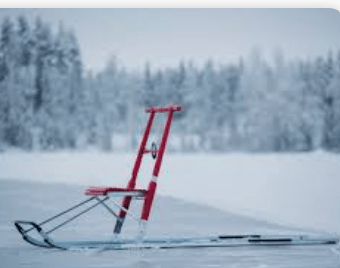
This winter, the winter as we normally think of it, was very late. Even in Southeast Finland, snow can stay as early as October, and almost every year we have a white Christmas. Once Mum even had to drive to work by her kick-sledge! Her car did not have winter tires yet, and the sudden autumnal snow was so thick.
This winter, it snowed a bit on some days in November and December. Everything looked nice and bright, but it soon melted. In Lapland, the sun stays “in bed” for about two months, and also in SE daylight (or greyness) lasts only a few hours. Without snow, it’s so, so dark.
Snow didn’t bother me; unlike many felines, I would walk through it. Mum threw snowballs, which I loved to catch. I suppose it’s because I was born in March and saw snow when I first opened my eyes.
Snow or not, in wintertime, birds from the woods move nearer to humans. Bullfinches blow their tin pipes even in the city center. Great and Blue Tits and many other non-migratory birds appear in backyards looking for food.
In Finland, we feed birds only in winter, as they find seeds, berries, and insects in nature. Many apartment houses have banned feeding totally because of unwanted guests like rats, but in private gardens, you can see feeders full of birds.
I used to watch birds in our backyard from my vantage point on the balcony table. They came to check on me, but were clever enough to keep the distance. Those cheeky, shouty magpies tried to scare me, in vain. Nowadays, little birds flap their wings behind the windows, tweeting to mum: Where are our sunflower seeds!
Mum doesn’t feed birds on her balcony, although she would love to. Luckily, her neighbour, a true birdwatcher, attaches a thick slice of lard to a tree trunk under a metal net. Birds can peck through, but rats have no entrance. It would be a wonderful surprise if a White-backed Woodpecker came to lunch one day.
This black season can make humans feel blue, but it also causes problems for animals who change their fur colors. Squirrels turn from brown to grey, and hares change from grey to white. They are too easy to spot on the dark ground by hawks and owls in the city parks.
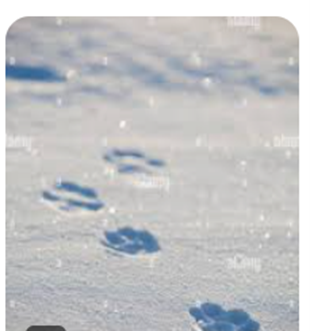
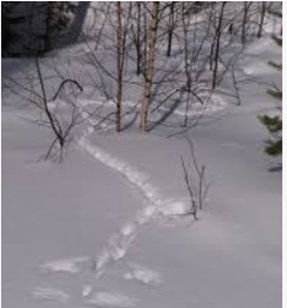
Celsius degrees above zero mean lower heating costs and less slippery roads, pavements and broken limbs for humans. Glittering snow in the rare winter sunshine is worth waiting for. It’s even better with paw prints, both bigger and smaller.
 The Anipal Times