I sometimes think the Pussy-Willows grey Are Angel Kittens who have lost their way, And every Bulrush on the river bank A Cat-Tail from some lovely Cat astray. — Oliver Herford, The Rubáiyát of a Persian Kitten
In the small cathedral of muscle and instinct, the hind limbs do not strike—they harvest. Not in anger, but in memory of a hunt written long before the first house was built. ― Elyria
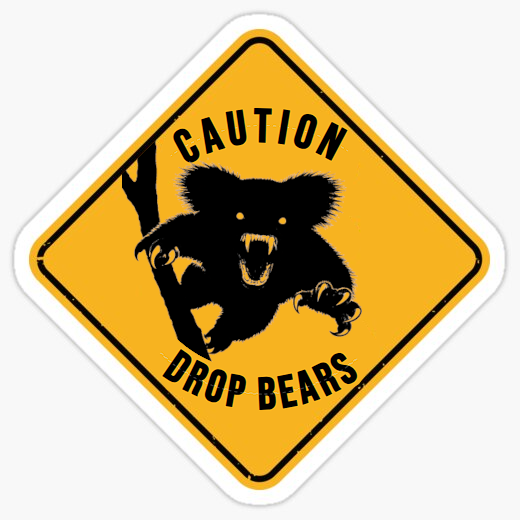
The Drop Bear (Thylarctos plummetus) is a large, arboreal marsupial native to the forests of Australia. A distant relative of the koala, it is described as a heavily built animal with powerful forearms for climbing. It is roughly the size of a large dog or leopard, with coarse mottled fur and a vicious bite.
Drop bears inhabit dense forests and tall woodland along Australia’s Great Dividing Range. From their elevated perches they wait silently in the thick canopy then drop onto unsuspecting prey walking below. The impact alone can stun a victim, allowing the drop bear to subdue it quickly with claws and teeth. The drop bear may haul the carcass up into the branches to finish eating it later.
Although drop bears prefer medium-sized mammals such as kangaroos or wallabies, bushwalkers are warned to remain alert beneath heavily wooded areas. Not only is the drop bear itself dangerous, but their food caches can fall and cause serious injury.
A variety of folk remedies can be used to prevent drop bear attacks. Vegemite behind the ears, forks worn in the hair, or adopting a convincing Australian accent are often recommended but none of these tactics have ever been scientifically proven.
In case you haven’t guessed, the Drop Bear is a cryptid. Australians tell the tale of the drop bear to tourists who are already a little spooked about Australian wildlife.
Getting Started with ChatGPT: A Quick Guide for Beginners
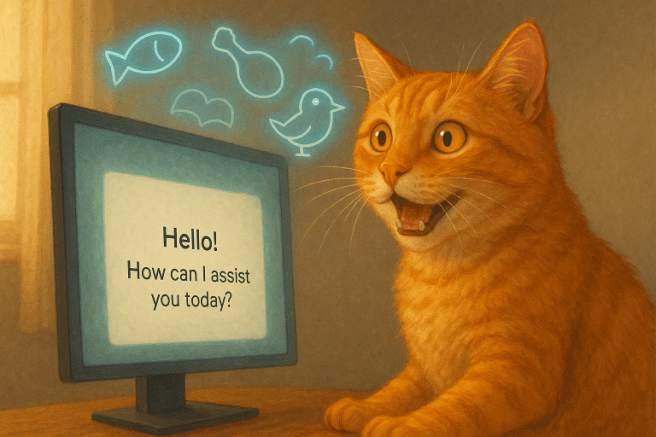
Getting Started With ChatGPT by ChatGPT and kittehboi
Although ChatGPT can be a hard-hitter, solving tough problems in finance, engineering, math and physics, it can be your personal idea buddy, helper, and teacher too! The more you play with it, the more you’ll discover. Go to ChatGPT.com and give it a try!
Start Simple
Try asking about everyday topics: “Help me write a short thank-you note.” “What’s a good dinner recipe with chicken, almonds, and rice?” “Can you explain gravity like I’m 10 years old?”
Be Clear and Specific
The more specific your question, the better the answer. Instead of: “Tell me about dogs” Try: “What’s the best dog breed for apartment living?”
Talk Naturally
You don’t need special commands. Just ask like you would ask a friend: “What’s a fun book series for teens?” “How do I make a resume?”
Ask Follow-Up Questions
If the answer isn’t quite right, reword the question. “Can you explain that in simpler words?” “What are some examples?” “Can you show me a shorter version?”
Use ChatGPT for All Kinds of Tasks
Learning and studying: “Summarize the American Revolution.” Creative writing: “Write a poem about the ocean.” Brainstorming: “Give me 10 gift ideas for a 12-year-old.” Planning: “Help me create a budget for vacation.” Emails and messages: “Draft a professional thank-you email.”
Ask for Help About ChatGPT
You can even ask how to use ChatGPT better: “What kinds of things can I ask you?” “What’s the best way to get creative ideas from ChatGPT?”
Through all this horror my cat stalked unperturbed. Once I saw him monstrously perched atop a mountain of bones, and wondered at the secrets that might lie behind his yellow eyes. — H.P. Lovecraft, The Rats in the Walls
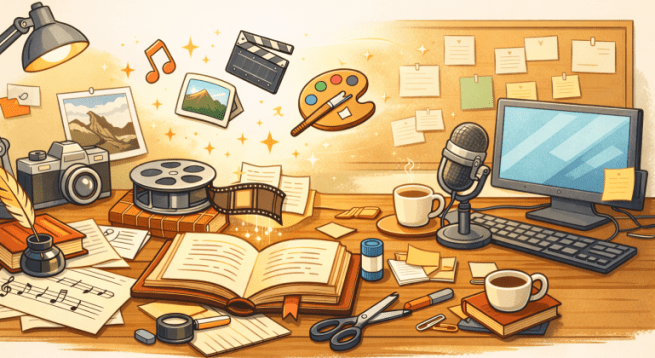
Content creation using PD Sources by ChatGPT and kittehboi.
🎨 General Public Domain Search Tools
Creative Commons – An international nonprofit organization that empowers people to grow and sustain the thriving commons of shared knowledge and culture.
Europeana – Discover Europe’s digital cultural heritage.
Digital Public Library of America – A platform that brings together many collections of America’s libraries, archives, and museums, and makes them freely available to the world.
Library of Congress – Use the largest library in the world online or in person!
Internet Archive – A non-profit library of millions of free texts, movies, software, music, websites, and more.
📚 Books & Text
Project Gutenberg – A library of over 75,000 free eBooks. The world’s great literature is here, with focus on older works for which U.S. copyright has expired.
Internet Archive – Over 20,000,000 freely downloadable books and texts.
HathiTrust – Home to millions of digitized books and publications.
Standard Ebooks – A collection of high quality, carefully formatted, accessible, open source, and free public domain ebooks that meet or exceed the quality of commercially produced ebooks.
Google Books – Find and download over 10 million free books and magazines, primarily classics published before 1925.
Library of Congress – Search millions of items in many formats and languages.
The Metropolitan Museum of Art – Over 492,000 images of public-domain artworks, is available for free and unrestricted use.
Rijksmuseum – This innovative platform opens a world of beauty and knowledge, where images, archival sources, stories, and research come together.
National Gallery of Art – Free open access image downloads are now available directly from the object pages located on this website. More than 60,000 images are available for download.
New York Public Library – Explore 1,070,667 items digitized from The New York Public Library’s collections.
🎼 Music & Audio
Musopen – Provides recordings, sheet music, and textbooks to the public for free, without copyright restrictions.
Free Music Archive – Free access to open licensed, original music by independent artists around the world.
Library of Congress – Use the largest library in the world online or in person!
Internet Archive – Recordings ranging from alternative news programming, to Grateful Dead concerts, to Old Time Radio shows, to book and poetry readings, to original music uploaded by our users.
🎥 Film & Video
Internet Archive – Digital movies uploaded by Archive users which range from classic full-length films, to daily alternative news broadcasts, to cartoons and concerts.
U.S. Geological Survey – provides access to over 180,000 publications written by USGS scientists over the century-plus history of the bureau.
National Park Service – search by keyword, location, or file type (including photos, videos, audio, webcams, and podcasts) and filter for high-quality images.
(Always check each site’s usage guidelines.)
Important Reminder
Even on trusted sites:
Always check the license on each item.
Confirm it is truly public domain.
When in doubt, double-check.
Public domain is powerful — and careful use keeps you safe and professional.