
Guest Post–Angel Alma
Southeast Finland is ideally situated if you want to watch the arctic birds’ spring and especially autumn migration.
For instance, waders nesting in the North migrate in the springtime following the south coast of the country, but also those various species of geese.
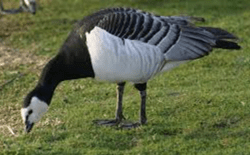
Perhaps the best-known migration show for common watchers, besides the “serious” birdwatchers, is the autumnal migration of Barnacle geese. Barnacle geese nest mostly around the Barents Sea, located north of the coasts of Norway and Russia.
They fly over Finland to their wintering areas around the North Sea. (Nowadays, Finland also has their own resident population, filling lawns in the parks of Helsinki, but that’s another story…).
However, in the last 20 years, more Barnacles started taking a stopover in SE Finland, to rest and eat before continuing their journey, usually in October. They changed habits a bit by surprise, landing in front of astonished humans.
Farmers weren’t, nor are joyful, using, for example, streamers, to frighten unwelcome visitors from fields.
Earlier, it was popular for birdwatchers to travel to Northern Karelia near the eastern border, where you could watch migration from a high hill and cover even the Russian side near Lake Ladoga, if the birds took that route.
A small town near the border even organized special Geese Weeks, where they erected a big tent with a stove to grill sausages and keep warm.
In October, the weather can be chilly, and as the Geese Migration needs a northern or northeastern wind, warm clothes are essential. Not to mention the sometimes hours of standing and waiting in wind and rain, watching the empty sky.
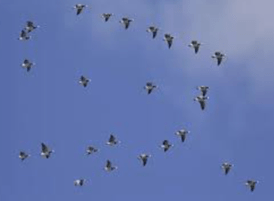
Mum has been there to see the phenomenon jokingly called “suffer birding”. However, when the crowd approaches from afar, soaring above your person while honking, one simply admires. Serious watchers, of course, count and mark the species in exact numbers.
Nowadays, you can watch the fall migration more easily. Just walk outside, and if you are lucky, listen to the honking approaching. Observe the sky, and they approach! Or visit the nearby fields, where geese fill their tummies and gather strength.
Then one day the wind turns and starts blowing from the right direction. Birds become restless, flying a bit there and back. Finally, the urge and instinct make them rise and drift into a formation. They fly higher and leave. Until next spring.


 The Anipal Times