
A little intro to the European Badger……our black and white stripy friend.
| Life Span: | 5 – 7 years (typical in wild). Have been known to live up to 13 years. |
| Body Length: | 75cm (30″) head to tail. 90cm (35″) max. |
| Weight: | 10 – 12kg (22 – 26lbs) average. 23 – 27kg (51 – 60lbs) heaviest recorded. |
| Distribution: | Found throughout Europe with sub-species present in all continents except the Arctic and Antarctic. Particularly abundant in Britain and Ireland with the majority found in southern England. |

Badgers are stocky, short-legged animals that are easily recognisable by the black and white stripes that run from their nose to shoulders. They have small heads and eyes with a thick short neck and long wedge-shaped body that ends with a short tail.
Their powerful short legs end with paws, each having five digits, which are tipped with long, thick, sharp claws. This makes them very efficient diggers.
Black and white hair covers the badger’s body, making it appear grey from a distance. They have black chests and legs, a highly distinguishable black-and-white striped head with black ears that are tipped with white. Some badgers have different colour variations, such as ginger (erythristic) instead of black (melanistic). Also, some can be white (albino).
It’s difficult to tell male from female badgers. Males are slightly larger and heavier than females and normally have a wider head and a longer, thinner and lighter coloured tail.
Badgers are nocturnal animals that spend most of their lives underground in burrows called setts. They have highly social behaviour and live in family groups of up to 12 individuals. These groups display signs of hierarchy, with a dominant boar and sow leading the group.
Around dusk, they usually leave their setts to forage for food throughout the night until dawn, when they return to the safety of their sett.
Badgers can live in a wide range of habitats. Badgers mainly live on the edges of woodlands and pastures. They also live in scrubland, under hedgerows, in old quarries, on moorlands and open fields. Sometimes, they even live in gardens on housing estates.
The badger must select habitat offering plentiful food year-round. The site also must be secluded and well covered to allow inconspicuous emergence from setts. It also needs to be free from disturbance.
What are they up to this time of year…
Badgers have spent October fattening up for winter and, weather dependent, will continue this in November.
People may see increased activity in gardens where badgers visit and more snuffle holes in their lawns.
Badgers are omnivores. Their diet consists mainly of earthworms and grubs but can also include frogs, small mammals, birds, eggs, lizards, insects, plant bulbs, seeds and berries. They love peanuts and jam sandwiches as a treat.
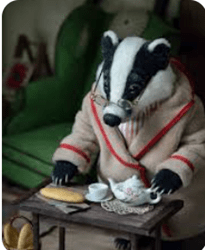


 The Anipal Times