Guest Post-Alma

Arctic Birds Migrating–A Spectacle To Enjoy

Southeast Finland is ideally situated if you want to watch the arctic birds’ spring and especially autumn migration.

For instance, waders nesting in the North migrate in the springtime following the south coast of the country, but also those various species of geese.

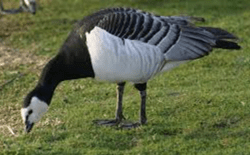
Perhaps the best-known migration show for common watchers, besides the “serious” birdwatchers, is the autumnal migration of Barnacle geese. Barnacle geese nest mostly around the Barents Sea, located north of the coasts of Norway and Russia.

They fly over Finland to their wintering areas around the North Sea. (Nowadays, Finland also has their own resident population, filling lawns in the parks of Helsinki, but that’s another story…).

However, in the last 20 years, more Barnacles started taking a stopover in SE Finland, to rest and eat before continuing their journey, usually in October. They changed habits a bit by surprise, landing in front of astonished humans.

Farmers weren’t, nor are joyful, using, for example, streamers, to frighten unwelcome visitors from fields. 

Earlier, it was popular for birdwatchers to travel to Northern Karelia near the eastern border, where you could watch migration from a high hill and cover even the Russian side near Lake Ladoga, if the birds took that route.

A small town near the border even organized special Geese Weeks, where they erected a big tent with a stove to grill sausages and keep warm. 

In October, the weather can be chilly, and as the Geese Migration needs a northern or northeastern wind, warm clothes are essential. Not to mention the sometimes hours of standing and waiting in wind and rain, watching the empty sky.

Mum has been there to see the phenomenon jokingly called “suffer birding”. However, when the crowd approaches from afar, soaring above your person while honking, one simply admires. Serious watchers, of course, count and mark the species in exact numbers. 

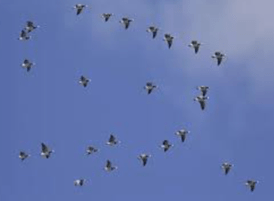
Nowadays, you can watch the fall migration more easily. Just walk outside, and if you are lucky, listen to the honking approaching. Observe the sky, and they approach! Or visit the nearby fields, where geese fill their tummies and gather strength. 

Then one day the wind turns and starts blowing from the right direction. Birds become restless, flying a bit there and back. Finally, the urge and instinct make them rise and drift into a formation. They fly higher and leave. Until next spring.

Badgers

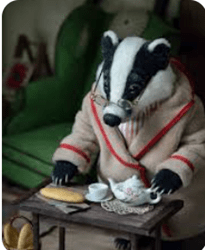
A little intro to the European Badger……our black and white stripy friend.

Life Span:5 – 7 years (typical in wild).
Have been known to live up to 13 years.
Body Length:75cm (30″) head to tail.
90cm (35″) max.
Weight:10 – 12kg (22 – 26lbs) average.
23 – 27kg (51 – 60lbs) heaviest recorded.
Distribution:Found throughout Europe with sub-species present in all continents except the Arctic and Antarctic. Particularly abundant in Britain and Ireland with the majority found in southern England.

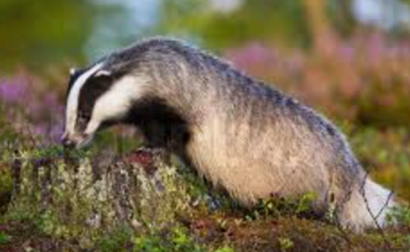
Badgers are stocky, short-legged animals that are easily recognisable by the black and white stripes that run from their nose to shoulders. They have small heads and eyes with a thick short neck and long wedge-shaped body that ends with a short tail.

Their powerful short legs end with paws, each having five digits, which are tipped with long, thick, sharp claws. This makes them very efficient diggers.

Black and white hair covers the badger’s body, making it appear grey from a distance. They have black chests and legs, a highly distinguishable black-and-white striped head with black ears that are tipped with white. Some badgers have different colour variations, such as ginger (erythristic) instead of black (melanistic). Also, some can be white (albino).

It’s difficult to tell male from female badgers. Males are slightly larger and heavier than females and normally have a wider head and a longer, thinner and lighter coloured tail.

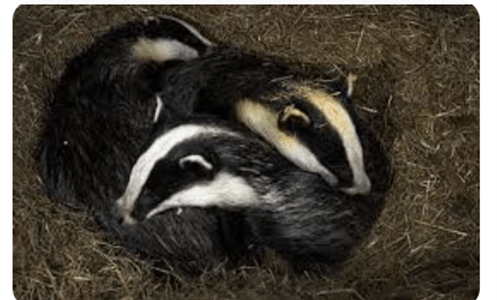
Badgers are nocturnal animals that spend most of their lives underground in burrows called setts. They have highly social behaviour and live in family groups of up to 12 individuals. These groups display signs of hierarchy, with a dominant boar and sow leading the group.

Around dusk, they usually leave their setts to forage for food throughout the night until dawn, when they return to the safety of their sett.

Badgers can live in a wide range of habitats. Badgers mainly live on the edges of woodlands and pastures. They also live in scrubland, under hedgerows, in old quarries, on moorlands and open fields. Sometimes, they even live in gardens on housing estates.

The badger must select habitat offering plentiful food year-round. The site also must be secluded and well covered to allow inconspicuous emergence from setts. It also needs to be free from disturbance.

What are they up to this time of year…

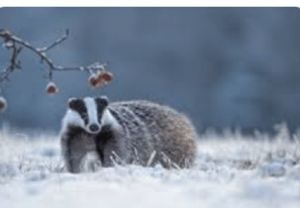
Badgers have spent October fattening up for winter and, weather dependent, will continue this in November.

People may see increased activity in gardens where badgers visit and more snuffle holes in their lawns.

Badgers are omnivores. Their diet consists mainly of earthworms and grubs but can also include frogs, small mammals, birds, eggs, lizards, insects, plant bulbs, seeds and berries. They love peanuts and jam sandwiches as a treat.

Guest Post: Angel Alma (and Mum) Introduction

Hi, I’m Angel Alma, and I am honored to visit McPusspuss Musings as a guest writer. I’m a Finnish tabby girl, born in a country house owned by mum’s friends. Mum collected me as a tiny kitten to live with my big brofur Aimo. We lived in Southeast Finland, near the eastern border, where Mum began birdwatching. SE Finland is a wonderful and interesting birding area, with bigger and smaller lakes, rivers, forests, and lots of countryside. The Gulf of Finland is not too far, either.

I had to travel over the Rainbow Bridge because of an illness. I had already been on cat Twitter and made many good friends there, like Angus and his family, so I decided to stay there as Angel Alma.

Mum is still a birdwatcher and loves nature overall. She lives now in a town near the big river Kymijoki, surrounded by wide fields and smaller lakes, and of course forests.

We are going to tell you about the nature in Finland, mostly near us. It’s lovely even to just visit the nearby park or watch birds during your daily walk. Just keep your eyes and ears open and enjoy.

McPusspuss Musings-Introduction

Hello and welcome to our column.

We are angel Angus McPusspuss and Furgus McPuspuss.

Both of us were older stray tomcats that found our forever homes late in life.

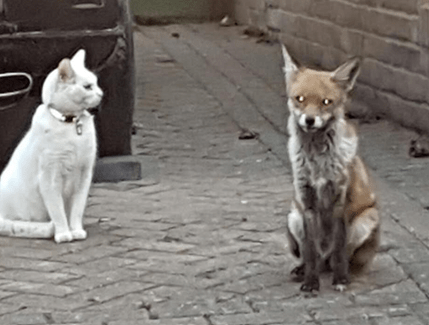
I, Angus, had a very special fox friend who led me to my pawrents’. Hunger drove me to join the foxes’ nightly food runs. One fox always made sure I had some food. Mummy and the neighbor, upon observing me, attempted everything to locate my owners, yet I possessed none, plus my chip held no registration. Mummy started feeding me more and inviting me inside, but it took me some time to be brave enough to move in. Even when settled in my home, I would still go out every evening and sit with my special foxy friend. 

Because I moved in just before Storm Angus hit, my pawrents, following Scottish links, gave me the surname McPusspuss. I had been called Pusspuss when living outside.

When my time sadly came to go over the rainbow bridge, I guided Furgus to my pawrents. The rescue trapped him because of his poor state following a decade of living on the streets. He hissed and swiped, revealing his fear. No one was giving him a chance until my pawrents did. When secure and cherished, he unwound. Now, he desires laps frequently and bedtime cuddles. Furgus gets to enjoy his later years with so much love. Furgus continues the McPusspuss family name and was called Furgus as a link to our pawrents’ love of Deacon Blue (Fergus sings the blues).

We will write articles on the weather (I am #weathercat), nature, and more specifically on badgers, as Mummy is on the committee of the Badger Protection Group.

We will have wonderful guest writings for our column by Angel Alma. Alma and her mum are special friends to us.